Property Manager Spring Service
For Leawood Managers
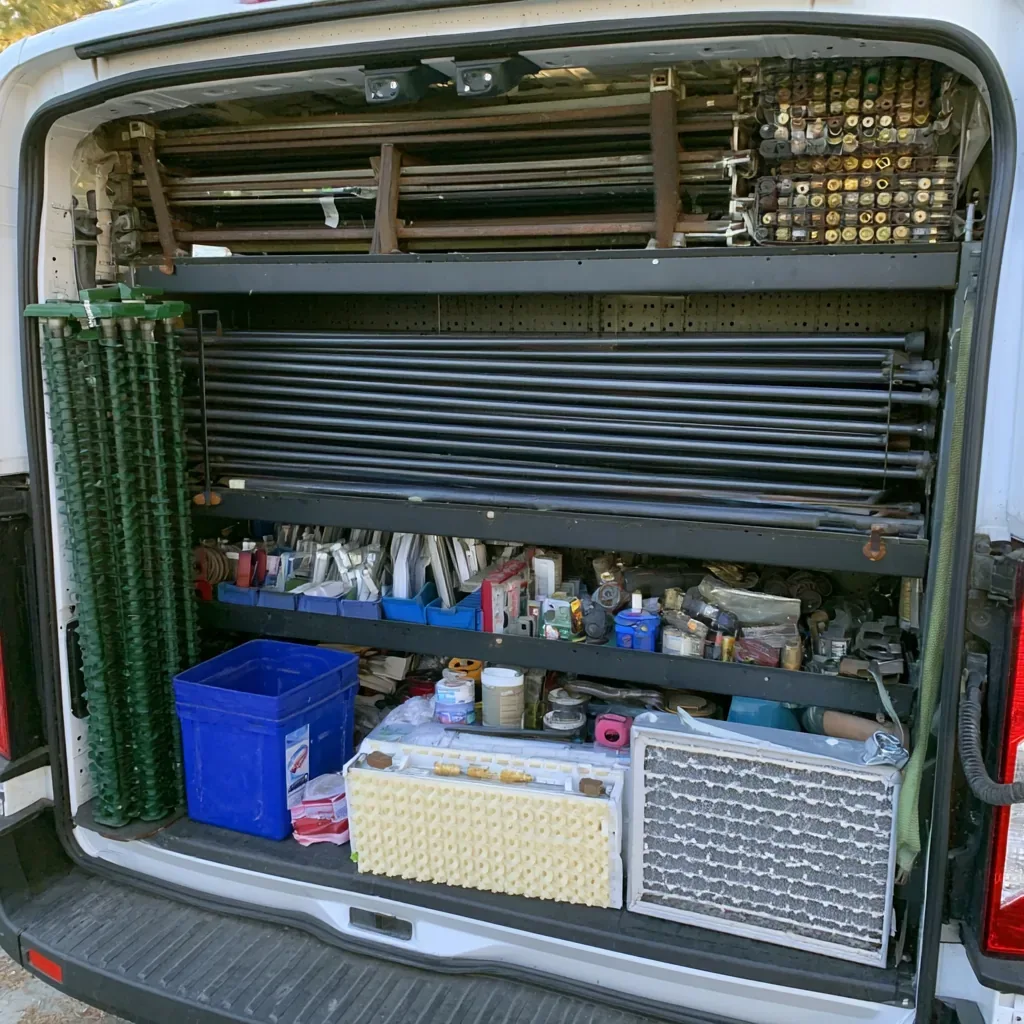
Roll-up unit-door springs, latch wear, and planned batch service to keep Leawood storage units rentable daily.
Self-storage door springs are the coil springs that lift small roll-up unit doors. In Leawood, tenant turnover and winter freeze-thaw wear springs and latches fast. Commercial spring repair replaces them in batches, with records, to keep units rentable and downtime short.
Self-storage door springs in Leawood are the coil springs that counterbalance each roll-up unit door so one person can lift it with one hand. When the spring is right, the curtain rolls even and the latch seats clean; when it is tired, the door feels heavy, hangs crooked, and tenants force it. This page covers why tenant turnover wears those springs out, how winter and slab movement add load, and how batch servicing and simple documentation cut downtime across a whole facility.
A Leawood building with frequent move-ins sees far more cycles on a few popular units than the row average suggests. New renters lift halfway to peek, drop the curtain instead of lowering it, and yank a stiff latch rather than reporting it. Each short pull still flexes the spring, and each forced latch bends guides and mars the bottom bar. Over months that uneven use leaves some unit doors slack and bouncy while neighbors still feel normal, which is why managers notice failures one door at a time near 119th Street corridors.
Cold is the second load on a Leawood storage row. About seventy percent of torsion breaks around the metro happen November through March, peaking when a mild afternoon in the thirties snaps to a hard freeze overnight and tired steel contracts and lets go. Below thirty-two degrees standard lubricant thickens, below twenty it stops helping, and daytime meltwater can freeze the bottom seal to the concrete pad. The next tenant then heaves on a stuck roll-up, and the weak spring takes the full shock.
A unit door in Leawood rarely fails at the spring alone. The latch gets the daily abuse, then the guides, rollers, and curtain slats carry the misalignment. Master-key-era cylinders and hasps stick after years of de-icing grit and spring pollen, so tenants pull sideways and rack the curtain in its channels. That drag makes a correct spring feel weak and tempts staff to log it as a spring problem. A pro check looks at latch action and track alignment first, because a new spring cannot fix a binding curtain.
Duty cycle decides how long that fix lasts for a Leawood owner. Many roll-up unit doors shipped with low-cycle springs sized for occasional access, not for a turnover unit opened daily during cleanouts and showings. Once cycles are spent, breaks cluster. Upgrading tired rows to higher-cycle springs during one scheduled visit spreads the cost and keeps the door count predictable. It is a capacity choice, not an emergency patch, and it matters most on end rows and drive-up units that rent first off Roe Avenue.
| Unit Issue | Downtime Sign | Batch Action |
|---|---|---|
| Tired roll-up springs | Heavy curtain, no lift assist | Batch spring replacement by building |
| Worn latch assemblies | Sticky key turn, dragging bolt | Latch rebuild during turnover check |
| Iced side guides | Meltwater freeze in track channel | Guide thaw and cold-rated lubrication |
| Binding curtain slats | Uneven lift with side rub | Curtain realignment plus tension check |
| Bent lock rods | Rod misalignment at floor keep | Keep reset for Roe Avenue units |
| Frayed lift cables | Slack cable with tilted drum | Paired cable and spring renewal |
| Grit-worn rollers | Gritty grind near 119th Street | Full-row roller replacement |
| Tenant turnover wear | Loose handles from daily slams | Cycle log for Town Center Plaza |
Ground movement adds quiet strain to Leawood rows built on Sharpsburg clay. The soil swells in wet springs and shrinks in dry summers, and near Tomahawk Creek the soft alluvium lets slabs heave and settle unevenly. When the pad tilts, the opening racks out of square, guides pinch, and rollers bind on one side. Staff feel it as a heavy unit door that needs two hands. Each forced lift overloads the spring, so the eventual snap on a January night looks sudden but started with concrete.
Batch servicing fits how Leawood facilities actually run. Sending help for one stuck curtain at a time means repeated trip charges, repeated tenant complaints, and open units waiting on parts. Walking a building in order, testing spring balance, latch function, cable evenness, and guide clearance, lets weak doors get flagged before they fail. Managers along College Boulevard often group replacements by building or hallway so rents stay available and staff only move locks and notices once.
Paperwork keeps that plan honest for a Leawood manager. A simple map with unit door numbers, spring install dates, observed balance, and latch notes turns vague complaints into a work list. Log each tenant turnover report, each adjustment, and each replacement with cycle rating so the next budget has numbers instead of guesses. When ownership changes or insurance asks for upkeep proof, that file shows scheduled care across the site without claiming more than the door area.
A failing spring gives clear signs before it lets go in Leawood. The curtain drops fast when lowered, drifts down after being parked halfway, or rises crooked with one side leading. You may see a gap at the coil, slack cable on one drum, or scrape marks where slats drag the guides. Tenants report the latch will not seat unless they slam it. Staff should tag that unit door out of service and stop lifting, because continued use bends the curtain and turns one repair into two.
For a Leawood facility with dozens of identical unit doors, the efficient approach is batch work rather than one-off calls. Each roll-up sees short, hard use during move-in and move-out, so tenant turnover wears the latch and spring far faster than daily storage access. Logging cycle counts and checking cable drums and guides lets a manager replace tired springs across a row on 135th Street before failure puts units out of rent. That record keeps turnover predictable and avoids a line of dead doors after a cold snap.
Older Leawood sites near College Boulevard still run mixed hardware from master-key days, with replacement latches that never quite match the original roll-up curtain. That mismatch forces staff to slam or lift unevenly, which loads one side of the spring and shortens its life. Standardizing the latch type per building, tagging each unit door with spring size and install date, and keeping that list for the Nall Avenue office cuts diagnostic time. That way the visit starts with parts that fit instead of extra trips for mismatched hardware.
The calendar that works in Leawood is inspection and cold-rated lubrication in September or October before the first hard freeze, then a winter-damage check in March or April. In between, staff can do monthly visual checks for ice at the sill, frost on sensors where fitted, and grit in the guides, without touching tension parts. After hail season look for dented slats that bind, and after ice storms check balance again. That rhythm catches tenant turnover damage while springs still have life.
Planning the visit saves more downtime than any single part for a Leawood site. Count stuck and heavy unit doors by building, note sizes and which latch types stick, and list high-use rows near State Line Road or Mission Road access points where turnover runs highest. Share office hours and where carts can stage so work moves down the row without blocking tenants. Grouping ten to twenty doors in one call keeps hallways open and lets staff handle notices in one pass.
A referral call goes faster when that list is ready for a Leawood manager. Describe balance symptoms, latch behavior, and any recent slab or drainage work near Ironwoods or Hallbrook that may have shifted pads. We are a free referral service, not a contractor, so we do not send our own crews or stock parts. We pass the building map and symptom notes on, then help set a scheduled window that keeps most units rentable while commercial spring repair moves through the row.
For Leawood operators the payoff is predictable rows rather than emergency calls. Older facilities toward Mission Road and State Line Road still carry master-key-era latch hardware that no longer matches after years of tenant turnover, so spring work is the time to standardize hasps and keying notes. Logging spring size, install date, and unit-door condition by building lets managers group replacements by vacancy, plan fall service before January contraction snaps tired coils, and show duty-cycle history when budgeting next year’s maintenance along corridors like 119th Street.
Whether you live near the center of the county or out toward its edges, we can put you in touch with the pros we connect you with, with neighborhood coverage across Johnson County includingOverland Park 66212, Overland Park 66213 and Overland Park 66214. If your address falls outside the usual service map, say so right away to check coverage.
For businesses, pricing is normally set per door per visit, then adjusted for size and visit frequency. Small loading-bay servicing is quoted per door, and a scheduled plan usually brings the cost of each trip down. Door height, parts volume, and night or weekend scheduling move the final figure.Commercial doors in Leawood use heavier springs, drums, and hardware than a home garage, so sizing by door weight and cycle rating changes the price. Mention door size, business type near Town Center Plaza, and daily cycles when calling the pros we connect you with to confirm scope.Compare the full cost bands through pricing guide; commercial overview explains how a scheduled service program is arranged.
For Leawood Managers
Commercial Door Plans
Johnson County Commercial Doors
There is no fixed year count because tenant turnover sets the duty cycle. A seldom-rented unit off 135th Street may run years, while a high-turnover door near Town Center Plaza can wear out a low-cycle spring quickly. In Leawood have the pros we connect you with check spring stretch, balance, and latch wear each fall before hard freezes, then replace tired rows together with dates logged for records.
Yes, batch work is normal for self-storage in Leawood. Servicing a full row in one visit cuts per-door labor and keeps most units rentable while empty bays are done first. Provide unit numbers, door sizes, and problem notes ahead of time. The pros we connect you with can tag each roll-up, log spring sizes and dates, and return a simple sheet for maintenance files without closing the site.
Springs lift and latches hold, so they fail differently. In Johnson County tenant turnover means drilled locks, pried hasps, and slammed curtains that bend latch linkage while the coil still lifts. Sharpsburg clay shift near Tomahawk Creek can also rack guides so the latch misses. A pro check covers latch plates, hasps, guide alignment, and spring balance together, since fixing one without the other brings callbacks.
Leave the unit door closed and do not force the curtain or lock rod. A broken roll-up has no lift assist and can drop or bind, especially after a Leawood overnight freeze when meltwater ices the guides. Note the unit number, move tenant access if possible, and have the pros we connect you with replace the spring and check the latch before returning the unit to rent.
Send your unit count and door sizes for Leawood batch scheduling, and the pros we connect you with will quote downtime and documentation.
Call (913) 365-0692