Spring Types
Garage Door Spring Types for Leawood Homes
If your Leawood garage door feels heavy or uneven, the springs are usually the reason, not the opener or the brand on the panel. Most attached two-car doors here use a torsion system above the opening, while some 1960s ranches near 95th Street and Prairie Village still run older extension hardware along the tracks. This hub lays out how the two compare, how to read wire size, length, and color marks on a quote, and why matching the weight of a 16 by 7 steel door matters more than matching a label.
Short answer
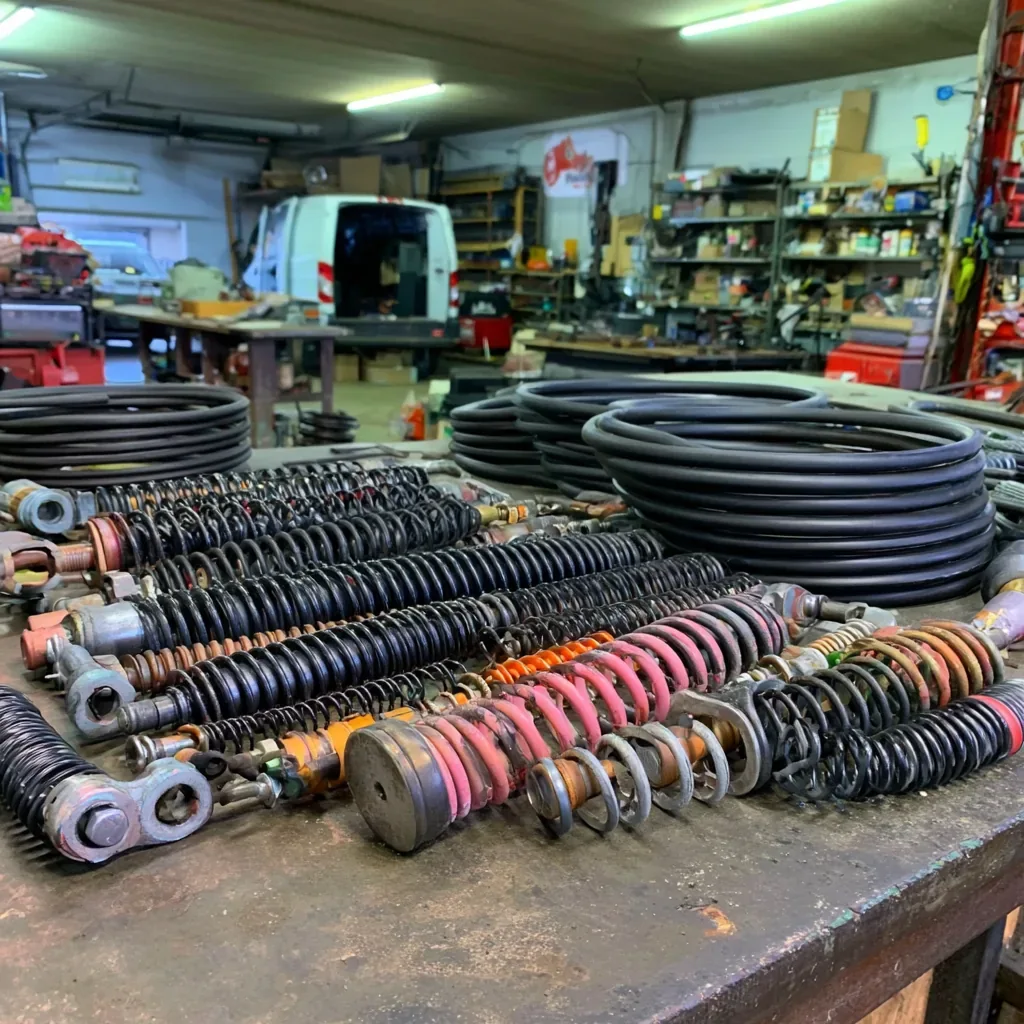
This hub explains spring types in Leawood, not opener or track repair. Torsion springs sit on a bar above the door and twist to lift, standard on most Johnson County two-car steel doors. Extension springs run along both upper tracks on older north-side ranches and need safety cables to catch a break. Size, family, and door weight set the approach. Anything under tension needs the pros we connect you with, from Hallbrook to Ironwoods Park and 119th Street.
Leawood winters break tired coils when a mild afternoon drops into the teens overnight, and shifting Sharpsburg clay around Hallbrook and Ironwoods Park can rack the opening so rollers bind and strain the springs. That is why quotes list inside diameter, wire gauge, and length instead of brand, and why insulated steel and carriage-house overlays near Town Center Plaza need different torque than older uninsulated panels. For hands-on checks and replacement, the pros we connect you with weigh the door and set hardware to that weight.
QUICK ANSWERS
Questions people ask
Is a torsion or an extension spring better for my house?
Most Leawood homes use torsion springs because nearly every attached two-car sectional steel door here is set up for them. They lift evenly and hold up better on wide, insulated 16-by-7 and 18-by-7 doors common south of 119th Street. Extension hardware survives mainly in 1960s to 1970s north-side ranches. Those older systems work, but they often lack safety cables and struggle when clay movement racks the tracks.
Can I upgrade my springs without replacing the whole door?
Often yes in Leawood. A heavier-cycle torsion spring or a spring rated for your door's actual weight can go on the same insulated steel door without changing panels or track, especially in central areas like Hallbrook where carriage-house overlays add weight. The pros we connect you with weigh the door and check cables, rollers, and the opener before matching size. A full door swap triggers HOA review; a spring-only match usually does not.
What do the colored paint marks on my springs mean?
The paint marks are a sizing code, not a brand. On torsion springs common in Leawood, a stripe along the coil marks wire thickness and a red or black cone marks wind direction, which together set lifting strength for that door weight. On older extension hardware still found near 95th Street and in Hallbrook and Ironwoods, a solid color on the end marks the weight range. The pros we connect you with match those codes to the existing door on site.
When does switching from extension to torsion springs pay off?
A conversion usually pays in Leawood when a north-side 1960s ranch still runs original extension hardware with missing safety cables, especially on a wide double door near Tomahawk Creek where slab heave binds rollers. Torsion holds the heavy door steadier, strains the opener less, and handles freeze-thaw cycles that snap tired coils each January and February. If the door and track are square and light, staying with extension can still make sense.
Start a conversation
Browse spring topics in one place
Start with the guide that fits a heavy door, snapped coil, or opener that strains and stops. The pros we connect you with check balance, drums, and bearings for Leawood owners and explain what must change in writing. Shifts on expansive clay near Tomahawk Creek Trail and older hardware off 117th Street often show up first as gaps or scraping. Note when it started and whether the door is shut, then call to review options and confirm visit terms.
Call (913) 365-0692