Most Leawood garage doors fail on the coldest morning of the year, not on a mild afternoon. You go to back out for school or work and the door jolts, bangs, and stops. This page explains that timing. A warm day in the 30s or 40s followed by a hard freeze overnight forces tired steel to contract all at once, and January and February in Johnson County deliver that pattern again and again.
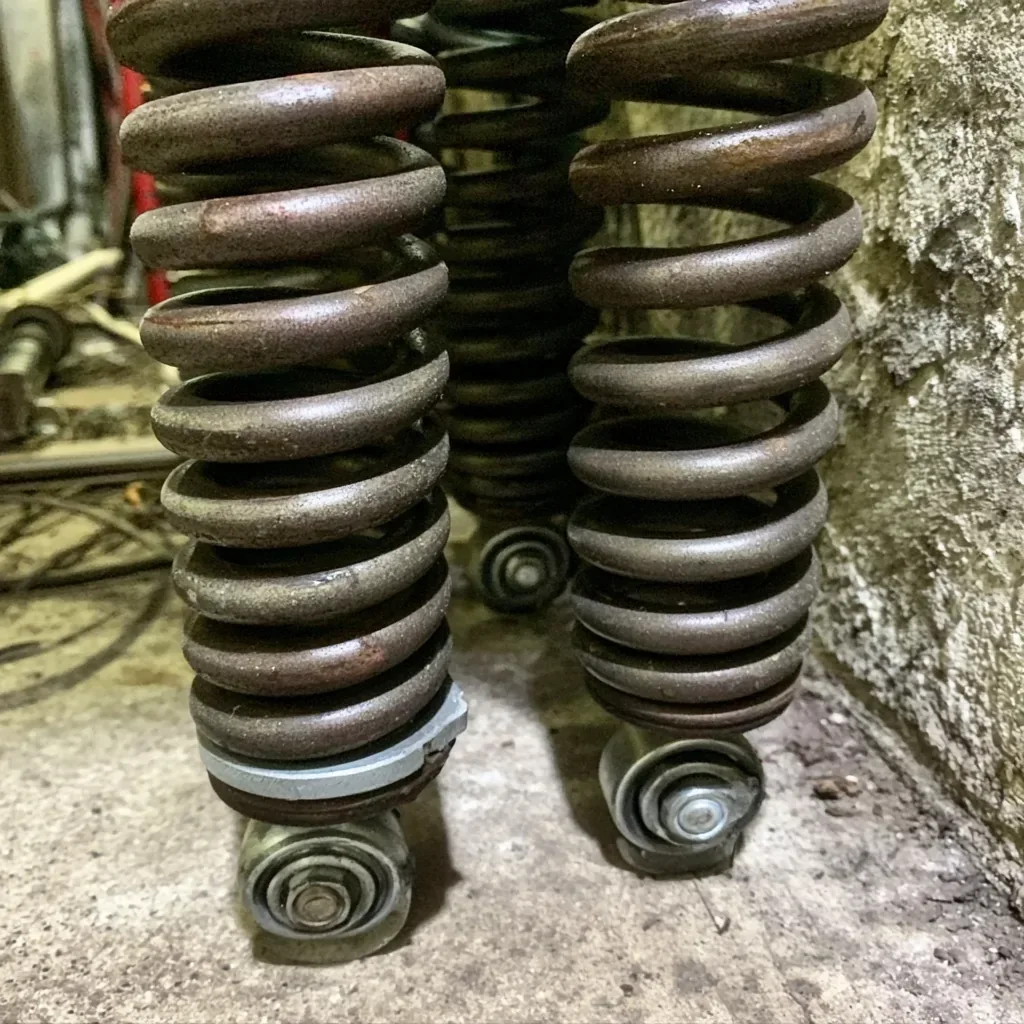
A torsion spring in Leawood lives under constant twist, and each lift leaves tiny fatigue cracks in the coil steel. After a mild winter afternoon the metal sits slightly expanded, then an overnight plunge toward single digits forces it to contract sharply. That sudden tightening pulls hard on the weakest, most worn spot, so a coil that survived fall often parts on a January or February morning. Sharpsburg clay shifting around Hallbrook garages near Tomahawk Creek and off 135th Street can add strain by racking the tracks.
What a Kansas Cold Snap Really Is
Steel shrinks as temperature falls. The change in length is tiny, but a torsion coil is already held under high tension, so even a small contraction raises stress through the whole coil. In Leawood winters, nights that drop into the teens or single digits make that contraction sharp. Healthy steel handles it. Steel that already carries years of flexing near Tomahawk Creek homes or off College Boulevard does not have the same margin left.
The warm spell matters because it lets the crack grow unnoticed. When Leawood sits in the upper 30s or 40s for a day or two, the garage moves easily and the coils flex through their full range. A fatigued spot stretches and relaxes without breaking. Homeowners near Hallbrook often use the door more on those mild days for errands and school runs. Each extra cycle works the weak coil once more before the temperature falls.
How Cold Shrinks Torsion Steel
Then the front passes and Leawood drops about 30 to 40 degrees inside 24 hours. The coil tries to contract quickly while still wound tight from holding the closed door overnight. Stress crowds into the thinnest point of the wire, usually where rust pits or old flex marks have narrowed it. That is why the break so often happens around 5 or 6 a.m., before the first lift of the day, with a loud bang from the garage.
After the coil parts, the Leawood door becomes dead weight of more than 150 pounds. The opener was built to guide a balanced door, not to lift that load alone. The motor will hum, pull hard on the top panel, and then stall or reverse. That strain can burn out the opener if repeated. Leave the door down, keep people clear of the opening, and let the pros we connect you with check the balance.
Why Fatigue Matters More Than Age
The bulk of torsion-spring breaks in the Kansas City metro happen across the November-to-March cold season, worst in January and February. Leawood follows that pattern because those are the months with repeated freeze-thaw and the deepest overnight lows near 20F. By midwinter the coils have already lived through 25 to 35 freeze-thaw cycles. Each cycle tightens and loosens the steel, so fatigue that survived fall finally meets a night cold enough to finish it.
Leawood soil adds load before cold adds stress. Much of the city sits on Sharpsburg silty clay loam that swells when wet and shrinks when dry. Near the Blue River and Tomahawk Creek corridors, garage slabs and aprons can heave or settle unevenly. A racked opening pulls tracks slightly out of square, rollers bind, and the door needs more lift. A tired coil near Ironwoods Park may still work in October, then fail on the first hard January freeze under that extra friction.
Why January Breaks the Most Springs
Age decides how much fatigue is already in the wire. Northern Leawood ranches from the 1960s and 1970s have cycled doors for 55 to 65 years on the same clay, and some still carry older extension hardware. Central estate lots in Hallbrook and Leawood Estates carry wide double doors that cycle heavy insulated panels. Southern builds near 135th Street and 143rd Street have modern torsion systems, but they sit on the same active clay and see the same January contraction.
A common Leawood question is why both coils fail close together. Most double doors use a matched pair wound to share the load. Both have lived through the same winters, the same summer heat near 90 degrees, and the same number of lifts. When one parts, the survivor suddenly carries the full door for a cycle or two. If it is equally fatigued, the next hard night finishes it too, which is why pairs are discussed together.
Why February Brings the Second Wave
Cold also thickens what is left on the hardware. Below 32F standard lubricants grow sluggish, and below 20F they largely stop letting rollers and hinges move freely. The spring then works against extra drag with every turn. De-icing salt tracked onto Leawood concrete adds grit to rollers and hinges, and daytime melt that refreezes overnight can glue the rubber bottom seal to the slab. The coil feels all of that as added weight on a night it is already shrinking.
It helps to know a snapped coil from a door that is only frozen. A snapped torsion coil in a Leawood garage usually leaves a visible gap in the tube above the door, loose or hanging cables, and a door that feels far too heavy to lift by hand. A frozen seal or frosted photo-eye near State Line Road or Nall Avenue more often leaves the spring intact but the opener flashing or reversing. Do not test the difference by forcing the opener; look, listen, and step back.
What That Overnight Bang Means
If you hear that bang on a January night in Leawood, keep the car and people out from under the door. Do not try to wind, unwind, or adjust anything, because winding bars under full tension can cause severe injury. Keep the opener off so it does not strip gears trying to lift dead weight. Note the gap in the coil, the door size, and the symptoms, so the pros we connect you with can size the replacement correctly.
That still leaves the questions most Leawood readers ask next. How old were my coils, and had slab movement near 119th Street or Mission Road already been binding the tracks? Why did a mild December pass but a single February night break the wire? And how can you tell a balanced door from one that is starting to drag before the next snap? Those answers depend on the door in front of you, not on winter in general.
Why a Mild Afternoon Hides Risk
A 45-degree afternoon in Leawood can make an old torsion spring feel fine because warmer steel is slightly more flexible and the door still balances. Tiny fatigue cracks along the coil do not close up, they simply carry load a little easier for a few hours. Drivers along College Boulevard may open and close the door several times without noticing drag. The damage stays hidden until temperature falls fast after dark and the metal must contract around those weak spots.
After sunset the front moves through Johnson County and the garage air can lose thirty degrees before morning. Steel shrinks as it cools, so each coil pulls tighter and stress concentrates at the thinnest, most cycled point. In Leawood garages that point is often near the center cone where cycles add up. By 2 a.m. the added tension is enough to finish the crack. Homeowners hear nothing until the next lift attempt, when the door feels dead and will not rise.
How Shifting Slabs Strain Tired Coils
Leawood sits on Sharpsburg clay that swells when wet and shrinks when dry, and garage slabs near Tomahawk Creek move a little with every season. When the slab or apron heaves, the door opening racks out of square and the vertical tracks no longer line up. Rollers drag instead of rolling, so the torsion spring carries uneven load through each cycle. That extra friction does not break steel by itself, but it leaves less margin when a hard freeze suddenly tightens everything.
The effect shows most in north Leawood, where 1960s ranches off State Line Road have opened the same doors for decades on active soil. Central estate lots in Hallbrook carry long foundation runs in contact with clay, so small shifts repeat year after year. Each bind adds bending stress to coils already thinned by use. Then a January night in the teens forces contraction on top of misalignment, and the most fatigued section parts. The cold did not act alone; it finished a strain cycle soil started.
Why Only One Spring Lets Go
Most Leawood two-car doors use two torsion coils sharing one shaft, and they never fatigue at exactly the same rate. One side may see more moisture from daytime melt, slightly more grit, or more cycles from partial openings in homes near Gezer Park. That coil develops a deeper micro-crack first. When steel contracts overnight, stress seeks the weakest cross-section in the whole system. The slightly weaker spring reaches its limit before its partner, so one coil snaps while the other looks intact.
After that single break the door in a Leawood garage weighs well over one hundred fifty pounds dead, far beyond what an opener is built to lift. The intact spring cannot balance the full panel alone, and trying the button only strains the motor and cables. Residents along 119th Street often describe one side hanging lower or a loud bang from the night before. The fix is not adjustment by hand, because winding bars under tension can cause severe injury, so the pros we connect you with handle the paired replacement.
Can Cold Break a New Spring?
Cold alone rarely breaks a fresh coil in Leawood because new steel has full cross-section and no crack to concentrate stress. Contraction still happens on a single-digit night, but the load spreads evenly around the loop. Trouble starts after thousands of open-close cycles thin the metal and leave tiny surface checks. About seventy percent of metro breaks happen November through March for this reason. The freeze is the trigger, while repeated use over Kansas winters supplies the underlying weakness that lets go.
A newer torsion system in a Leawood home near Ironwoods Park may ride out a forty-degree drop with only louder creaks and slower movement. An older door off Nall Avenue with unknown cycle history has far less margin, especially if slab shift has already racked the tracks. That is why two neighbors can face the same overnight low and only one wakes to a failure. Age does not set an exact year, but accumulated cycles plus a sharp contraction decide which coil survives January.
Does Spring Size Change Cold Risk?
A heavier insulated panel in Leawood stores more energy in its springs than a light uninsulated panel, so each coil works under higher baseline tension. Carriage-house overlays in Hallbrook and the Hills of Leawood add further weight without changing wire physics. When a hard freeze shrinks that highly loaded steel, the jump in stress is larger than on a lighter door. Size alone does not doom a spring, but a wide eighteen-foot three-car door has less reserve when contraction hits a fatigued spot.
That is why Leawood homeowners along 135th Street with double-wide steel doors notice January failures more often than owners of a single bay. The mechanism is still the same: fatigue first, contraction second. A correctly matched coil set spreads the door weight evenly, while an undersized or mismatched set runs near its limit all year. When temperature drops from the forties to the teens overnight, the door with the highest stored energy and deepest crack is the one most likely to snap.
Dealing with this in your home?
In Leawood, most spring trouble starts with winter, not use, as repeated freeze-thaw cycles tighten fatigued steel until a cold night snaps a coil on an attached two-car sectional door. Johnson County homes from Hallbrook to the 135th Street corridor and near Ironwoods Park often show the same pattern: a door over 150 pounds dead, an opener straining, and roots drying clay on one side of the slab. This post explains why cold breaks happen, what a safe repair visit covers, and when to call the pros we connect you with.