In Leawood, a matched pair means two torsion springs mounted side by side above the door, sized for the same weight, turns, and cycle life so they lift as one. Most attached two-car doors here need that shared effort to stay level. This article explains why those two age together, how fatigue leaves the survivor close behind, and why even balance matters for cables, tracks, and the opener. The ideas below build in that order.
A typical Leawood sectional steel door runs sixteen by seven or eighteen by seven feet and weighs well past what one coil should handle alone. Splitting the load lets each spring carry about half, so the shaft turns evenly from center to ends. In neighborhoods such as Hallbrook, where carriage-house overlays add panel weight, that even sharing keeps the door from racking. One spring doing all the work would twist the shaft and pull one cable harder than the other.
What Matched Pair Means Here
Think of springs in cycles, not years. One cycle is a full open and close, and a pair installed together in Johnson County shares every cycle from day one. A Leawood family running school, work, and practice trips may log four to six cycles daily, so both coils harden, flex, and tire at the same pace. When one coil snaps, the calendar and the counter say the other has lived the same life, even if it still looks intact from the floor.
Leawood winters finish what those cycles start. With twenty-five to thirty-five freeze-thaw swings a season and sharp drops into the teens, cold steel contracts and fatigued coils let go, mostly from November through March. Homeowners along 135th Street see the pattern every January when a warm afternoon in the forties snaps to a hard freeze overnight. Both springs in a Leawood garage feel that same shock, so the unbroken one is rarely far behind.
How Two Torsion Springs Share Load
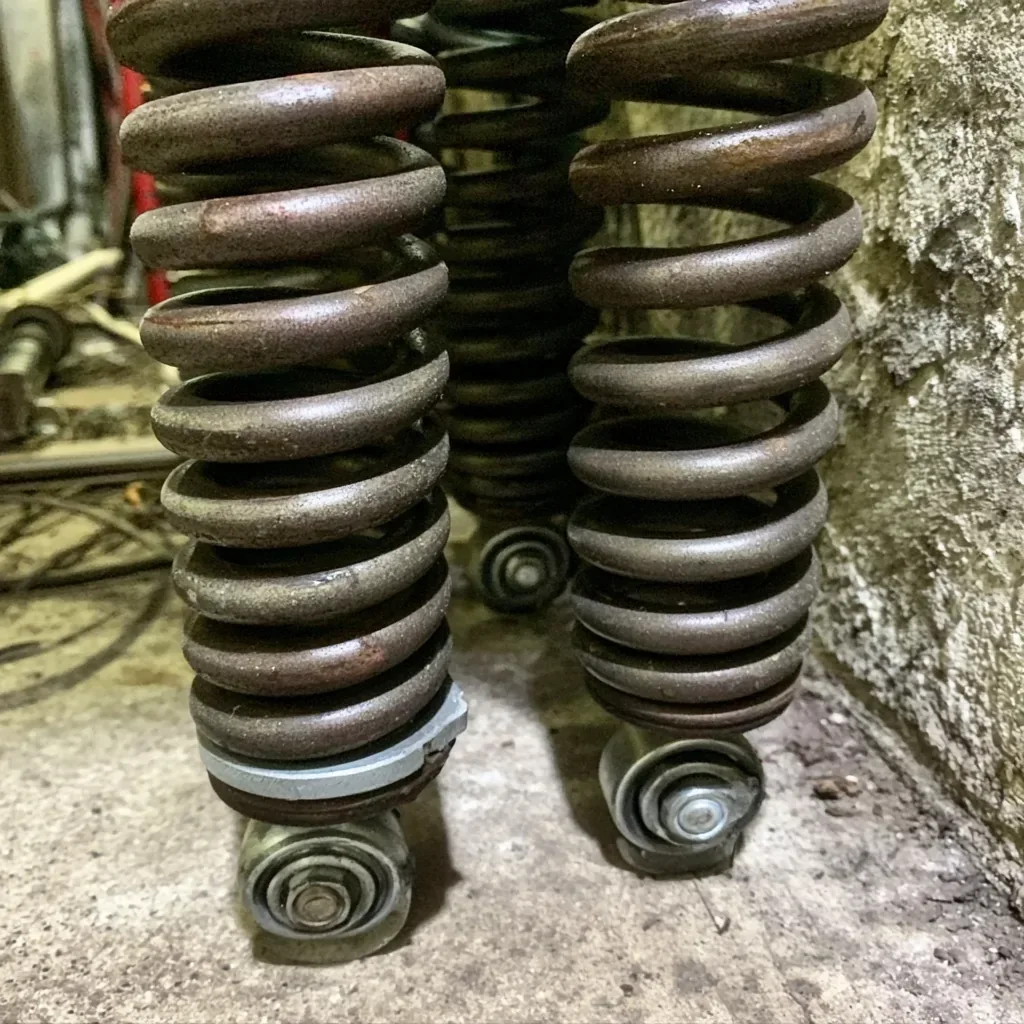
After thousands of flexes, spring steel loses its snap. Tiny cracks form inside the coil where you cannot see them, and the wire no longer returns with full force. In a Leawood home near Leawood Estates, that means the surviving spring after a break has already lost torque, even if the gap from the break is only on its mate. It will stretch farther to hold the same door, which speeds its own cracking and shortens whatever life it had left.
Pair a fresh coil with a tired one and they pull unevenly. The new coil wants to lift its rated share, while the older one sags and lags a quarter turn behind. That mismatch shows as a door that rises crooked, pauses, or drops faster on one side. Older extension hardware still found in north Leawood ranches near Mission Road is even less forgiving, because an uneven pull loads one cable and one stack of track hardware more than the other.
Why Cycle Life Runs Out Together
Balance is how the pros we connect you with judge the pair. In a balanced Leawood garage, the door will hold near halfway without racing up or sinking down when checked with the opener released. That only happens when both springs feed equal torque into the center shaft. Homes near Tomahawk Creek notice this in winter, when cold-stiffened parts and a heavy bottom seal already add drag and leave no margin for one-sided lift.
When lift stays uneven, the Leawood door does not travel square. One lift cable stays tight while the other goes slack, rollers climb one track faster, and the panel edges rub or pop. Around Ironwoods Park, where expansive Sharpsburg clay can shift the garage slab a fraction, tracks are already sensitive to alignment. Add a mismatched spring pair and binding gets worse, which wears hinges, frays cables, and forces the opener to drag a crooked load.
What Happens With One Old Spring
A matched pair means two torsion springs sized as one system for a single sectional door in Leawood. Both coils share the same wire size, inside diameter, length, and cycle rating, so each side lifts its half of the weight together. Most attached two-car doors around Hallbrook use this setup on a single shaft above the opening. When one coil snaps after years of open-close cycles and hard winter contraction, the survivor has lived the same life. That shared age is why the pros we connect you with address both together.
A torsion shaft under load stores enough force to cause severe injury, so Leawood homeowners should never touch winding bars, set screws, or cable drums. Broken coils have sharp ends, cables can whip, and a free-falling door can trap a car or injure anyone beneath. If a spring has snapped along 119th Street or anywhere in town, keep the door closed, keep the opener off, and arrange an inspection visit to confirm timing directly when calling.
How Balance Keeps Doors Tracking Straight
When the pros we connect you with replace springs, they match wire size, coil length, inside diameter, turn count, and left and right wind for the exact door weight. A Leawood door near Gezer Park gets weighed and measured first, then fitted with two coils from the same cycle rating so torque stays symmetrical. Mixing diameters or reusing one old coil throws that math off, and the door never balances cleanly through full travel.
Leaving the old spring in place creates uneven lift across a wide door in Leawood. One side pulls with full strength while the tired side lags, so the door racks slightly as it rises and drops. That twist binds rollers in the tracks, wears hinges and cables unevenly, and forces the opener to work against drag it was never made to handle. Homes near Ironwoods Park with 16 by 7 and 18 by 7 steel doors show this quickly. Replacing as a pair restores even pull left to right.
Why Cold Snaps Expose Uneven Strength
Torsion springs on a two-car door in Leawood, from Hallbrook to homes off Nall Avenue, are installed as a matched set with the same wire size, coil count, and cycle rating, so both age together from the first lift. When one breaks, the survivor has lived through thousands of the same freeze-thaw lifts and lost much of its temper, even if it looks intact. Leaving that tired spring beside a new one pulls unevenly across the shaft, so the door drifts, rubs the tracks, and strains the opener. Replacing both restores even lift, which is why the pros we connect you with quote them together.
This leaves most Leawood readers with three follow-up questions: how old are my current springs, what cycle rating fits my door use, and what will the visit involve from arrival window to warranty terms. A quick look at coil tags or past invoices helps, but only a hands-on balance check answers it. To get that check near Prairie Village, Leawood City Park, or anywhere in Johnson County, contact the pros we connect you with and confirm timing directly when calling.
Why Visual Match Is Not Enough
Two springs can look alike in a Leawood garage yet pull very differently if one has thousands more cycles on it. A matched pair means same wire size, coil length, inside diameter, and wind direction, plus same starting cycle life. When one spring is older, it has lost more tension through metal fatigue, so the door twists slightly on every lift. That twist shows up as rubbing on tracks near Hallbrook homes with heavy carriage-house overlays. The pros we connect you with measure both springs rather than trusting appearance.
Metal fatigue does not show as a clear color change or crack in most Leawood doors until the break. Each open and close flexes the steel, and after years along corridors like 135th Street, the older coil loses lift while the newer one still pulls hard. From the floor both springs look tight and intact, so a homeowner assumes the good one can stay. On a scale the difference is clear, with one side lifting less and forcing the shaft to work unevenly every cycle.
What Left and Right Wind Means
Torsion systems in Leawood use one left-wound and one right-wound spring so torque pulls evenly from both cable drums. The wind is not about the side of the garage alone, but about how the coil is wrapped to lift without slipping. A true pair is mirror-image, ordered for door weight, height, and track radius. If a replacement flips that orientation or mixes sizes, the shaft binds and one cable goes slack. Homes near Ironwoods Park with tall 18 by 7 doors feel that bind first.
When pulls are unequal, a Leawood sectional door does not rise level. One side leads by half an inch, rollers drag against the track, and hinges take side load they were never shaped to carry. Over weeks that drag wears rollers flat and chips paint along the edge. Winter road grit tracked onto the slab adds friction at the bottom seal, so the imbalance grows louder. Replacing both coils together resets that pull to even, letting the door hang centered and roll without fighting itself.
When Single Replacement Still Makes Sense
There are narrow cases in Leawood where keeping one spring is reasonable. If both were installed together last season and one fails early from a manufacturing flaw or a cable snag, the survivor still holds nearly full cycle life. Another case is older north-side extension hardware, where sides act more independently than torsion shafts. Even then, the pros we connect you with check stretch, hook wear, and door balance before leaving the older side in place.
Keeping a tired mate usually shortens the service window in Leawood because the older coil now carries extra stress from compensating. After a single swap, the new coil does more of the lifting while the fatigued coil lags, which speeds its final failure during a hard freeze. Many Johnson County doors show this pattern, with a second break weeks after the first. Pairing resets both sides to the same starting point, so future checks track one age instead of two competing histories.
What Inspection Checks Before Recommending Pairs
A careful check in Leawood starts with the door closed and the opener disconnected, watching how the weight sits without assistance. The inspection notes coil gaps, rust dust at the cones, cable tension on each drum, and whether the door holds halfway without drifting. Corridors like Mission Road see many 16 by 7 insulated doors, where even a small side-to-side difference tilts the top section. Those clues point to matched cycle age as the cause, not a track or roller issue alone.
Balance is the reason Leawood doors survive daily use without wearing out openers. Torsion springs should carry almost all of the 150-plus pounds, leaving the motor to guide rather than lift. With one fresh and one weak spring, the motor strains on one side and limit settings drift. Homes near Tomahawk Creek Trail often notice humming, slow starts, or reversal at the top. Restoring equal lift takes that side load off the drive and lets rollers stay seated.
What To Ask Before You Schedule
Before calling in Leawood, note the door size, whether springs sit above the opening, and whether one coil shows a clean split. Photograph both springs from a safe distance and list recent symptoms like crooked rise or loud bang in the night. Ask what size and cycle rating fits the door, and whether both sides will match. Streets near Gezer Park expect tidy work and a written scope, so confirm visit terms and warranty details in advance.
Both torsion springs on a Leawood door share every open and close, so when one snaps in a January freeze the other has the same metal fatigue and cycle count. The pros we connect you with see this daily from Hallbrook to homes off 135th Street and near Ironwoods Park: leaving the old spring means uneven lift, with one side pulling hard and the other lagging, which twists the sectional door and wears cables and bearings. Two matched springs restore even torque and keep the door level.
Dealing with this in your home?
In Leawood, most spring trouble starts with winter, not use, as repeated freeze-thaw cycles tighten fatigued steel until a cold night snaps a coil on an attached two-car sectional door. Johnson County homes from Hallbrook to the 135th Street corridor and near Ironwoods Park often show the same pattern: a door over 150 pounds dead, an opener straining, and roots drying clay on one side of the slab. This post explains why cold breaks happen, what a safe repair visit covers, and when to call the pros we connect you with.