Most Leawood garage doors do not break without warning. Through a Johnson County winter the steel fatigues a little more with every freeze-thaw cycle, and the change shows up first as slower travel, extra weight, new sound, a stretched look, or simple age. This guide near Hallbrook pulls those early signs together in one place so you can tell a tired spring from a sensor or opener issue. The sections below each describe one sign and point you toward the page that explains that problem fully.
Think of this Leawood page as a roundup, not a repair manual. Each short section names what you might see or hear from your attached two-car or three-car sectional door off College Boulevard, why springs wear that way in our hard freezes, and where to read more. We do not diagnose any one fault here in depth. If a sign matches what you have at home, follow the link to its own troubleshooting page, and leave any hands-on spring work to a trained pro.
Why Springs Give Hints First
A slower lift is often the first clue around Leawood. The door still moves on its 16 by 7 or 18 by 7 tracks near 135th Street, but it lags coming off the concrete, pauses midway, or the opener strains and reverses. Cold thickens ordinary lubricant below freezing and tired torsion coils simply store less lift, especially after a January night in the teens. Our page on slow and uneven door movement explains opener strain, track drag, and spring fatigue one by one.
Watch for the pattern in your Leawood garage without testing anything under load. If both sides rise evenly but slowly, and the problem is worse on cold mornings near Ironwoods Park, worn springs are high on the list. If one side jerks or the door looks crooked, track, roller, or cable wear may be sharing the blame. Note when it started, whether cold makes it worse, and read the slow-lift diagnosis page next for the full comparison.
Door Lifts Slower Than Usual
A heavier hand feel is a classic Leawood warning. With the opener disconnected only by a pro for testing, a balanced door should stay near waist height and lift with modest effort, but a fatigued spring leaves over 150 pounds of dead weight on Nall Avenue homes. Many Johnson County owners first notice it when the emergency release feels suddenly heavy or the opener hums without lifting. Our page on heavy manual lift walks through balance, weight shift, and slab settlement.
Do not force a heavy door in Leawood, and never try to re-tension the coils yourself. Winding bars under full tension cause serious injuries every year, and the opener will burn out if asked to carry the load alone. Near State Line Road, expansive Sharpsburg clay can also shift the slab and change how the door sits, which adds to the feel. Use the heavy-door diagnosis page to sort balance loss from alignment change, then call a pro if weight has clearly increased.
Door Feels Heavier By Hand
Small new noises deserve attention in a Leawood garage. A tired torsion system near Leawood Estates may creak, pop, or groan as coils bind and release, quite different from the steady hum of a belt drive or the rattle of loose hardware. Winter makes it louder because cold-rated lubrication matters below freezing and standard oils stop helping near 20 degrees. Road grit and de-icing salt tracked in during winter also wear rollers and hinges. Our noise diagnosis page breaks those sounds apart.
Listen for when the sound happens in your Leawood home. A single sharp pop from above the door near Tomahawk Creek, followed by looser cables or a door that will not stay up, often means a coil has already let go. Repeated squeaks through travel point more toward dry rollers or hinges needing pro-applied silicone or lithium grease. Note the location, timing, and whether cold triggers it, then move to the door-noise page for the detailed match before anything breaks on a freeze night.
New Popping or Creaking Sounds
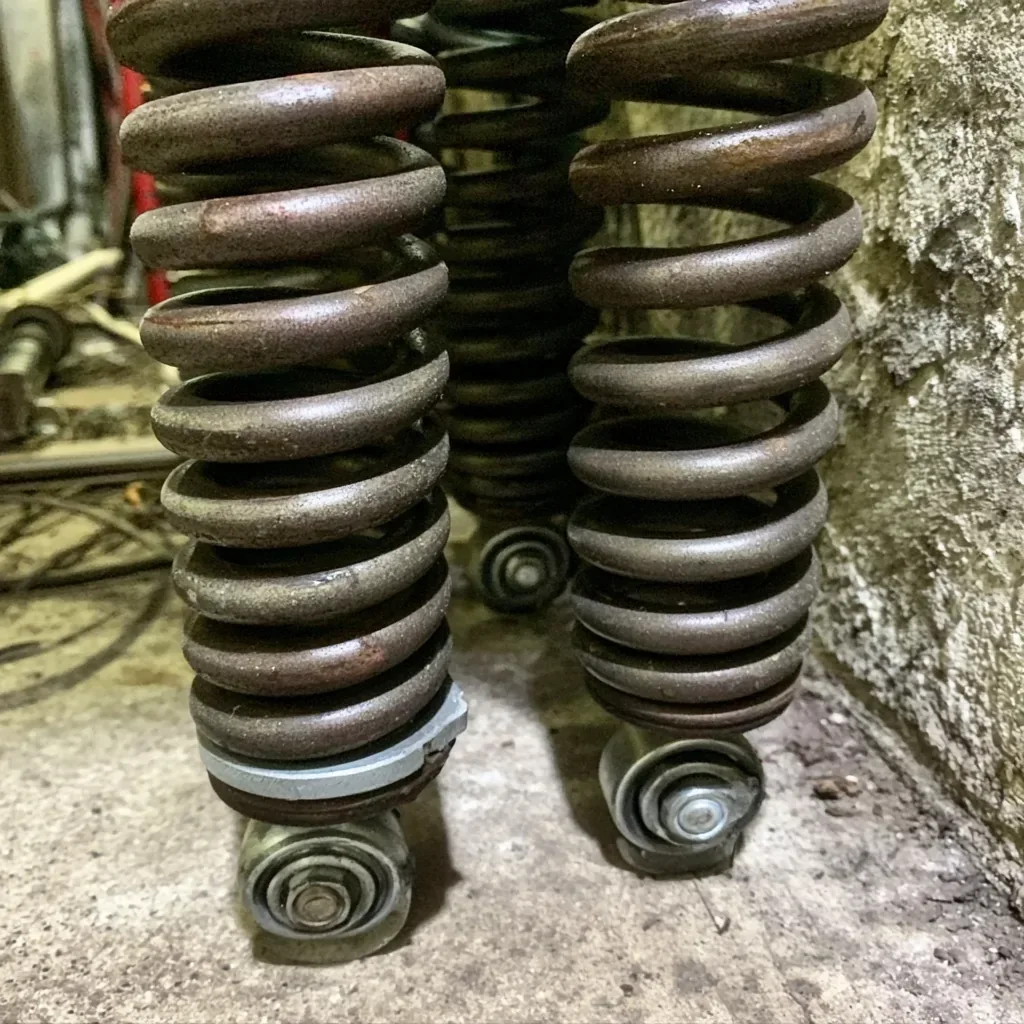
A stretched or gapped look is easy to spot from the floor in Leawood. Torsion coils above the door near Mission Farms should sit tight and even, so visible daylight between coils, a stretched section, rust bloom, or a two-inch gap where the steel has parted means the spring can no longer store lift evenly. Older extension hardware on north side ranches can show stretched coils and slack safety cables. Our stretched and broken coil page shows what normal spacing looks like versus failure.
Look but do not touch the Leawood spring set. Photos from Roe Avenue to 119th Street show the same story after 25 to 35 freeze cycles a winter, when a warm spell in the 30s snaps to a hard freeze overnight and fatigued steel contracts and snaps. Do not run the opener repeatedly once you see a gap, because the motor and cables take the strain. Compare your photo to the visible-damage diagnosis page, keep people clear, and have a pro confirm the break.
You Can See Stretch and Gaps
Age past cycle rating is the quietest warning in Leawood. Most torsion springs near Gezer Park are rated for a set number of open-close cycles, often used up in seven to ten years on a busy family door with school, work, and sports trips. If your door dates to the 1990s or early 2000s build wave and still carries its original springs, metal fatigue is well along even when lift still feels normal. Our spring age and cycle-life page explains how use, weight, and cold shorten that span.
Check history rather than hardware in this Leawood case. Near Town Center Plaza, many insulated steel doors on three-car garages cycle twice as often as owners guess, and hail dents or spring pollen on sensors can mask the underlying wear. If you do not know the install date, look for a builder sticker, opener replacement date, or prior work receipt. Read the age-based replacement page for timing and inspection rhythm, with a full pro inspection and cold-rated lubrication each September to October.
Springs Are Past Rated Age
If two or more of these signs line up at your Leawood house near the Hills of Leawood, treat the system as near the end of life. Keep the door closed, keep cars and stored items clear, do not pull the emergency release on a jammed door, and never force a panel frozen to the slab with the opener. A like-for-like spring swap here is a repair that rarely needs a city permit, while a full door change does. The pros we connect you with can test balance safely and confirm timing when you call.
This Leawood roundup leaves most readers with three follow-up questions. Which single diagnosis page fits my exact symptom, slow travel, heavy feel, noise, visible gap, or age. Is it safe to keep using the opener for a day or should the door stay shut. And what should I ask about insurance, scope, and warranty before work begins. Start with the linked symptom page that matches best, write down what you saw and when, then bring those notes to your call.
Cold Snaps Expose Weak Coils
In Leawood, most tired coils let go after a sharp overnight freeze, not on a mild afternoon. Steel contracts fast when temperatures drop from the 40s into the teens, and a spring already near its cycle limit cannot take the extra stress. That is why January and February bring the most calls from areas like Hallbrook and along 135th Street. If your door worked yesterday and now hesitates on a cold morning, treat it as a warning roundup sign and read on before forcing anything.
Think of cold as a test, not the cause. The metal fatigue was building for years through daily lifts, summer heat, and ordinary road grit on rollers. A 40-degree swing in a day just finds the weak spot. You do not need to diagnose which coil failed. Note when it happens, whether the opener strains, and whether the door stops halfway, then use those details to pick the right troubleshooting guide below.
What You Can Check Safely
From the garage floor, look at the torsion coils above the door for gaps or uneven stretching, listen for new creaks or pops during a cycle, and watch whether both sides rise evenly. Check that the bottom seal sits flat and the photo-eye lights glow steady. If anything looks or sounds different, stop using the door and describe exactly what changed when booking help.
In Leawood, concrete driveways can heave slightly after freeze-thaw, so check the bottom seal and photo-eyes too. Meltwater that refreezes overnight can glue the seal to the slab, making the opener strain like a spring problem. Wipe sensors gently, clear pollen and grit in spring, and never pull a stuck door hard or adjust tension yourself. If the door will not stay halfway up when released by a pro, springs are likely done.
Should You Keep Using Opener?
Near State Line Road, many garages hold insulated 16 by 7 doors that weigh well over 150 pounds once spring help is gone. An opener is built to guide the door, not dead-lift it, and repeated tries can strip gears or burn the motor. If lift is slow, stops mid-travel, or reverses, stop using the wall button and remote. Leave the door closed and move cars outside until you have answers from the guides below.
Think of this roundup as triage. A slower cycle points to one detailed page, a heavier hand lift to another, and noise or stretch to their own explainers. Do not mix them into one fix. Pick the sign that matches best, read that answer fully, and you will know whether you face a lubrication visit, a roller issue, or springs past rated cycles.
When Should You Call for Help?
If the door in your Leawood garage will not open at all, opens crooked, or slams down fast, step back and call. Same if you see a clean two-inch gap in the coil or hear a loud bang like a firecracker in winter. Those are end-of-life signs, not tune-up signs. Confirm timing directly when you call, and have door size, age, and symptoms ready for Mission Farms area scheduling.
Do not try to wind, unwind, or tighten anything under tension, even with online videos. Winding bars can slip and cause serious injury. Instead, ask the pros we connect you with for a written scope with visit charges, parts, labor, and warranty terms before work begins. A like-for-like spring swap rarely needs a permit or HOA approval, unlike a full door change.
What Will the Pro Ask?
When you describe warning signs from your Leawood home, the pro will want door width, spring age, daily cycles, and what changed first. Mention if lift slowed over weeks near Tomahawk Creek Trail humidity or failed after one freeze. Photos of the coil, opener brand like LiftMaster or Chamberlain, and any carriage-house overlay weight help them bring the right torsion set.
Keep this page as your starting map. Each sign below links to a focused answer that explains causes, safe checks, and next steps without repeating service pages. Start with the symptom that fits best, then move to opener strain or age questions as needed. By the end you will know what to say on the phone and what not to touch.
Dealing with this in your home?
In Leawood, most spring trouble starts with winter, not use, as repeated freeze-thaw cycles tighten fatigued steel until a cold night snaps a coil on an attached two-car sectional door. Johnson County homes from Hallbrook to the 135th Street corridor and near Ironwoods Park often show the same pattern: a door over 150 pounds dead, an opener straining, and roots drying clay on one side of the slab. This post explains why cold breaks happen, what a safe repair visit covers, and when to call the pros we connect you with.