In Leawood, April and May bring fast straight-line wind and sudden outages, and the attached sectional garage door is often where that force shows first. This page explains the common failure points in plain terms: how bracing carries wind load, what wind rating describes, and why battery backup matters when power drops. The sections below follow that order, starting with the panel span, then the tracks and opening, then springs and openers. It is information for understanding, not a repair claim guide.
Failure points means the spots where wind pressure and shaking concentrate on a typical Leawood two-car or three-car door. A sixteen by seven or eighteen by seven steel curtain is the largest moving wall of the house, so gusts push across the full face while the edges, rollers, and center struts take the load. When one link is loose, bent, or out of square, that spot moves more than the rest. The result is bowing, track slip, or a door that will not stay closed during a storm week.
Why April Wind Tests Garage Doors First
Most Leawood sectional doors are wide steel without much middle support, so bracing across the back of the panels does the work in April wind. Horizontal struts tie the sections together and pass the push to the side tracks and jambs. In subdivisions like Hallbrook with carriage-house overlays, the extra facing weight makes that tie more important. If a strut is missing, loose, or bent from a past hail hit, the center can bow inward on a gust and then spring back, working hinges and rollers loose over the season.
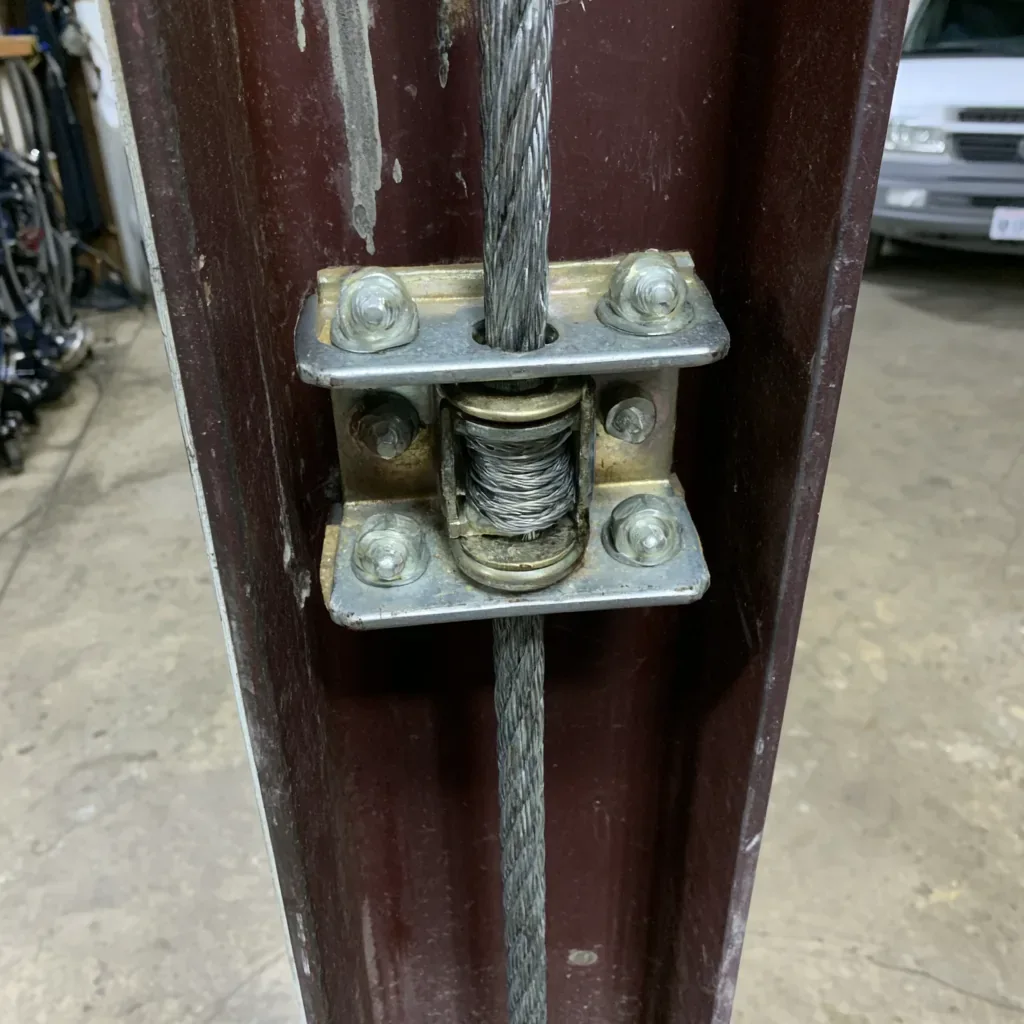
Tracks and the opening itself are the next Leawood weak link, especially where expansive Sharpsburg clay has moved the slab. When the apron heaves or settles, the opening racks out of square and rollers drag on one side. Near Tomahawk Creek where soils stay wet longer, that shift shows as a tight corner and daylight at the opposite jamb. Under repeated gusts the binding side takes more load, brackets flex, and lag screws in soft jamb wood can work loose, letting the whole curtain shudder instead of holding firm.
How A Closed Door Catches Wind
Wind rating, as used around Leawood and Johnson County, is a test description rather than a promise that nothing will move. It describes how much inward and outward pressure a door assembly of a given size, track, and bracing held in a lab, with latches closed. A higher number means it held more pressure before deflecting past the limit. It does not mean the door was tested with a cracked panel, loose track, or half-open position. For a reader, the useful point is comparison: rating assumes the full assembly is square, fastened, and shut.
Another Leawood failure point is at the floor, where wind finds any gap under the bottom seal. Daytime melt and spring rain leave grit on concrete drives along corridors like 135th Street, and the rubber seal wears unevenly as it drags. A worn corner lets gusts lift and flutter the bottom section, which pumps air into the attached garage. That flutter rattles the lowest hinges and cable drums more than steady pressure does, so a door that looks closed can still work itself loose across an April night of shifting gusts.
What Center Bracing Keeps Straight
In Leawood, the garage door is often the first part of the house to give in April and May wind because it is the largest unsupported wall. A typical two-car sectional steel door near Hallbrook flexes across sixteen feet, and if center bracing struts are light or loose, the panels bow inward and pull rollers from the track near Tomahawk Creek homes where slabs have already shifted. Once one track bends, pressure finds the gap. Older ratings assumed a square opening, so a racked frame near 135th Street fails sooner.
Power loss is part of the failure in Leawood tornado season, because a door without battery backup becomes a manual wall when the feeder drops. Many LiftMaster and Chamberlain belt and chain units here carry a backup battery, while older units do not. When lights flicker on a May evening, the opener may stop mid-travel or refuse remotes as photo-eyes lose alignment. Forcing it with the button strains the motor against a heavy, wind-loaded curtain, so the safe move is to leave the door closed and use a side entry until power steadies.
What A Wind Rating Describes
Leawood outages during spring storms leave many openers without power unless battery backup is in place, and a door with a tired torsion spring becomes dead weight over one hundred fifty pounds. LiftMaster and Chamberlain units common in Johnson County can run a short cycle on backup, but grit from winter road salt and April pollen around Ironwoods Park can slow rollers and coat sensors, so the opener stops and reverses. The pros we connect you with check balance, tracks, and backup charge without touching tension.
An attached garage in Leawood fails first because it holds the most air with the weakest wall. Living rooms share walls and a ceiling with the garage along streets like Roe Avenue, so once the large door bows or lifts, pressure builds inside and pushes at the entry door and ceiling drywall. Interior doors may thump or the garage-to-house door may whistle during gusts. That does not mean the house frame is hurt, but it shows why a square, latched, and fully closed garage door matters more for load than any window on the same windward side.
Why Tracks Loosen Under Pressure
Before storm weeks, a homeowner in Leawood can learn a lot without touching tension parts. With the door closed and power off at the wall button, look along the back for a missing or bent strut, sight down each vertical track for bowing or loose brackets, and check for daylight under corners near drives around Ironwoods Park. Listen for grinding or a lean to one side on one normal cycle. Do not loosen bolts, lift cables, or adjust springs. Note what you see and share it when you call, so the pros we connect you with arrive with the right context.
Spring service in Leawood is mostly re-squaring and re-fastening rather than swapping parts for looks. The pros we connect you with check strut fasteners, track plumb, roller wear from winter salt grit, cable seating, and opener force and battery state, using cold-rated silicone or lithium grease where the maker calls for it. They also confirm the door fully latches without holding the button. Because timing varies by route and workload along corridors like 119th Street, confirm the arrival window and written scope when you call rather than assuming a set hour.
How Outages Leave Openers Useless
After this walk-through, most Leawood readers are left with three practical questions that fit their own house. Is the span on my sixteen-foot door actually braced for gust load, or is it relying on hinges alone. Are my tracks still square after a winter of clay lift near streets like Nall Avenue, or is one side carrying the wind. And when the next outage hits, will my opener still close and latch once on battery, or will the garage sit open through the worst hour.
A final set of Leawood questions points to what to notice next on Tomahawk Creek evenings when clouds build over the Blue River basin. Does the bottom corner flutter before the rest of the curtain moves. Does the opener reverse for no clear reason while pollen coats the eyes. Does the door feel heavier than it did in fall. Writing down when each happens, with wind direction and power flickers, gives a clear history to discuss on the call without guessing at causes or touching any tension hardware.
Why Springs Fail After Wind Load
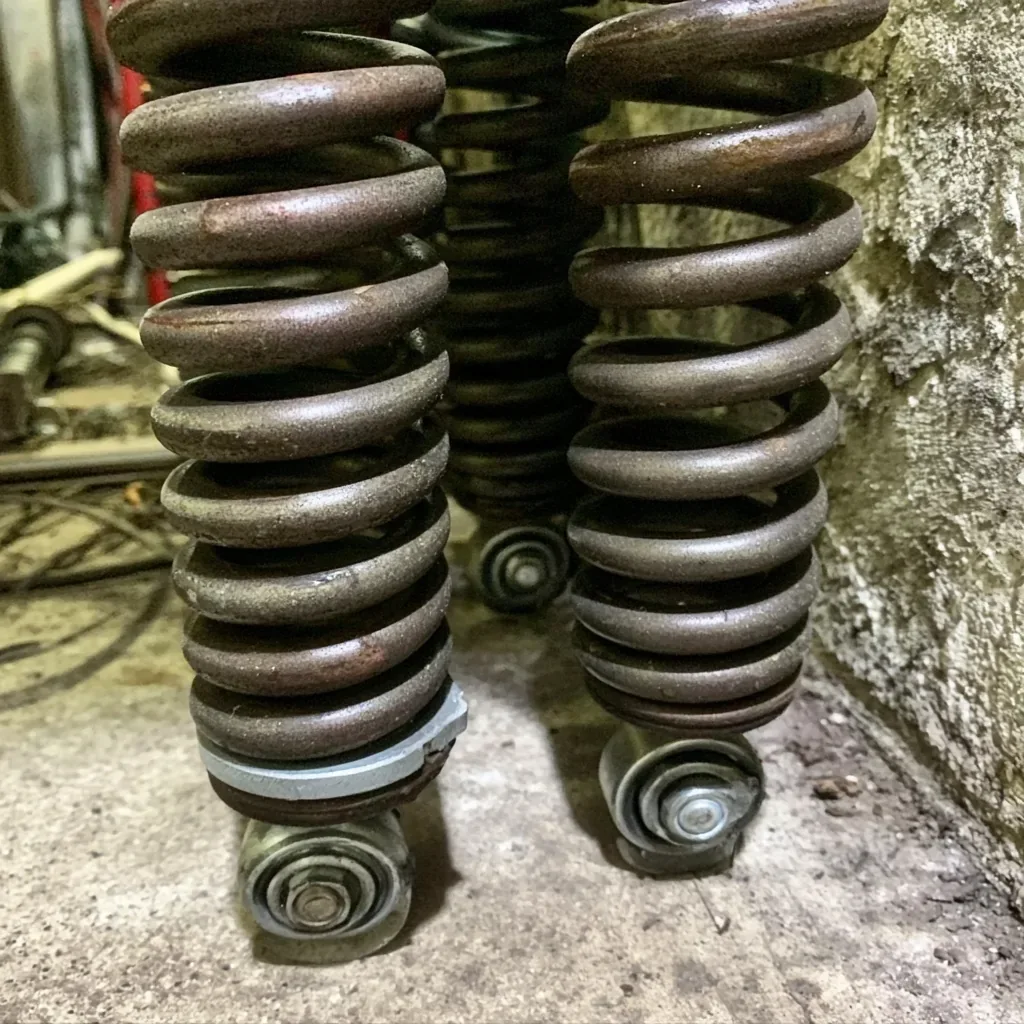
A Leawood sectional door rides on torsion springs sized for smooth, balanced lift, not for repeated inward flex. When April gusts push the wide 16-by-7 panel in and then release it, the springs take up the slack and then catch the weight again. That cycling adds strain to already tired coils after winter freeze-thaw. The steel does not crack at once, but each push works fatigue deeper, especially on older north-side ranches with long service years.
After a windy night, homeowners often notice the failure the next morning when the door feels dead and will not lift. The added wind load has finished a fatigued coil, leaving more than 150 pounds for the opener to pull. LiftMaster and Chamberlain belt and chain units in Leawood garages are not built to lift that alone and will strain or stop. Do not try to force it or touch winding hardware. Leave the door down and ask the pros we connect you with to inspect springs, cables, and balance.
How Sensors Misread In Spring Air
April and May bring pollen and ordinary road grit into Leawood garages, and that film settles on photo-eye sensors near the floor. The lenses read the haze as a blockage, so the door reverses or refuses to close just when wind is rattling the house. Vibration from gusts can also shift a lightly fastened bracket out of line. Wiping the lenses gently and checking that both indicator lights are steady is safe, but do not bend brackets or rewire anything if realignment is needed.
Wind finds worn seals before it moves panels. In Leawood, rubber bottom seals stiffened by winter cold often sit unevenly on the concrete slab, leaving small gaps at the corners. During a straight-line wind burst along the Tomahawk Creek corridor, air pushes through and lifts dust while the door shudders. That whistle does not mean the springs failed, but it shows where pressure enters. Look for daylight lines and cracked rubber in daytime, then leave seal and track adjustments to a pro.
Why Clay Slab Shift Binds Rollers
Much of Leawood sits on Sharpsburg silty clay that swells in wet springs and shrinks in dry spells, and the garage slab moves with it. An apron that heaves even a quarter inch racks the door opening out of square. Tracks mounted to that frame twist slightly, so rollers bind on one side while the other side runs free. Before tornado season, that binding already loads the springs unevenly, which is why a door that sounded rough in March struggles more in April wind.
In Hallbrook and older subdivisions near Ironwoods Park, mature oaks and maples dry the clay on one side of a garage while the other side stays damp after rain. That uneven moisture tips the slab and puts a steady side pull on cables and rollers. Homeowners hear scraping, see a gap wider at the top on one side, or find the opener reversing. Those are frame and track signs, not a setting to tighten. A pro should measure the opening and reset alignment.
What Safe Checks Can You Do
Leawood homeowners can do a few no-tool checks after a windy April day without touching springs or cables. Stand inside with the door closed and look for daylight around the edges, bent track sections, loose roller brackets, and a bottom seal that no longer meets the concrete. Listen for grinding on one manual lift attempt only if the springs are intact, and stop if the door feels heavy. Note what you see near 135th Street estates or north-side ranches alike for the service call.
Power flickers are common during Leawood tornado-season storms, so know your opener before you need it. If your LiftMaster or Chamberlain unit has a battery backup, look for its charge light during calm weather and listen for its beep during an outage test. Learn where the red manual release handle hangs, but pull it only when the door is fully closed and the springs are unbroken. An unbalanced door can slam. If power is out and the door is heavy, wait.
When Should You Call A Pro
Call for help in Leawood when the door will not stay straight, the opener strains, a cable hangs loose, or a spring gap shows a break. Straight-line wind can loosen fasteners and bend thin steel panels from hail earlier in spring, and those weak points make the next gust harder on hardware. Describe the noise, the side that binds, and any outage behavior along Roe Avenue or near State Line Road so the visit focuses on alignment, balance, and opener function.
Do not attempt to wind, unwind, or adjust torsion hardware in a Leawood garage, since winding bars under full tension cause serious injury each year. Leave the door closed, keep cars and children clear, and ask for a written scope with parts, labor, and warranty terms before work starts. Ask for proof of liability insurance and the county license where it applies. Clear questions now prevent a stuck car later when May storms return.
Dealing with this in your home?
In Leawood, most spring trouble starts with winter, not use, as repeated freeze-thaw cycles tighten fatigued steel until a cold night snaps a coil on an attached two-car sectional door. Johnson County homes from Hallbrook to the 135th Street corridor and near Ironwoods Park often show the same pattern: a door over 150 pounds dead, an opener straining, and roots drying clay on one side of the slab. This post explains why cold breaks happen, what a safe repair visit covers, and when to call the pros we connect you with.