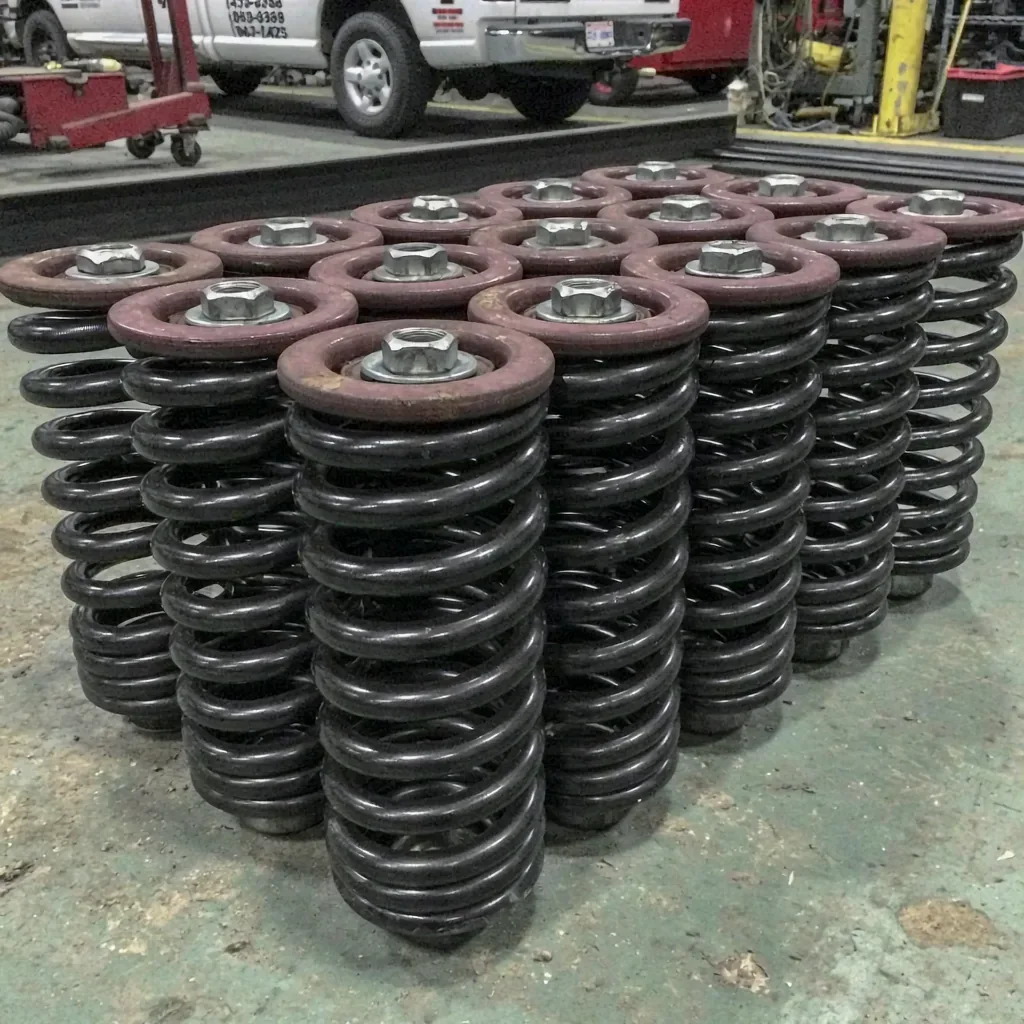
How Homeowners Safely Oil Torsion Springs in Leawood
Light silicone lubricant film on coils, bearings and steel rollers quiets doors each fall, no WD-40, no winding.
In Leawood, spring lubrication means a light silicone lubricant film on the coils, metal hinges, bearings and steel rollers of the torsion spring each fall, wiped clean first. It quiets noise and wear, but it cannot fix a tired spring — call the pros we connect you with.
What Light Silicone Actually Quiets
This Spring Lubrication Guide explains what light lubrication can and cannot do for a Leawood garage door. A thin film of cold-rated silicone lubricant on torsion-spring coils, bearings, and steel rollers reduces metal-on-metal friction, quiets squeaking, and helps the door move freely through freeze-thaw swings. It does not add lift, fix fatigue, or prevent a worn spring from breaking on the next hard freeze. The sections below lay out what to oil, what to leave dry, and when noise means replacement.
Leawood garage doors live through humid summers near 90 degrees and January nights near 20F, and that swing dries factory coating off torsion springs in Hallbrook, Ironwoods and along 119th Street. This guide explains what a homeowner can safely spray with silicone lubricant — coils, bearings and steel rollers — what to wipe clean, and what to leave alone. No spray restores lost tension, and WD-40 is not a substitute because it thins out and holds grit.
For safety, keep a clear line in this Leawood home guide between wiping and winding. A homeowner may look, listen, and, if confident on a ladder, apply a light spray of silicone lubricant to accessible spring coils, bearings, and rollers with the door closed and the opener disconnected. You may not loosen set screws, touch winding cones, adjust tension, or pull cables to reach a spot. Those parts hold full door weight, and winding bars under tension kill. Leave that to the pros we connect you with.
What to Spray and Wipe Clean
Start with the torsion-spring coils above the door in most Leawood houses. With the door closed, wipe dust and salt film with a dry cloth, then apply a very light spray of cold-rated silicone lubricant along the top of the coils so it wicks between them. You want a sheen, not drips. Blot excess. This quiets coil rub and surface rust noise, but it never restores lost tension or adds cycles to old steel near Hallbrook and Leawood Estates where doors cycle daily.
Next are bearings and rollers, the parts that actually roll. Leawood doors from central subdivisions around 119th Street and Nall Avenue usually use steel rollers with exposed ball bearings and a center bearing plate at the spring. Place one short spray of silicone lubricant into each bearing and at the roller stem where it meets the hinge, then run the door once by hand if safe or with the opener to spread it. Wipe the track clean; tracks are meant to stay dry, and grease there only collects grit.
Use only cold-rated silicone lubricant spray or a light lithium grease rated for low temperatures, both sold as garage-door lubricants. That cold rating matters because a summer oil will stiffen below freezing and make January grinding worse. No WD-40 on springs, bearings, or rollers. It is a thin cleaner, not a lasting lubricant, and it leaves a film that attracts Midwest road grit and spring pollen and wears parts faster. If that is all you have, wait until you have silicone.
What Never to Touch Yourself
Leave winding cones, set screws, cables, and the bottom brackets under tension alone in any Leawood garage, whether a 1960s ranch near 95th Street or a newer insulated door in the Hills of Leawood. Do not spray into the opener motor, photo-eye sensors, or rubber bottom seal, and do not oil a frayed cable to make it last. Frosted eyes should be wiped dry, and a seal frozen to the concrete slab from daytime meltwater should be thawed gently, never forced with the opener.
No spray restores a tired spring, and that mistake costs homeowners openers each winter. If the coil shows a two-inch gap, visible cracks, heavy rust, or the door feels over 150 pounds dead and the opener strains, lubricant will not help. The same is true when Sharpsburg clay has heaved the slab near Ironwoods Park and the tracks are out of square, so rollers bind. Oil quiets friction; it cannot straighten tracks, re-tension steel, or lift dead weight.
When Oil Cannot Fix Steel Fatigue
In Leawood, plan on a light maintenance pass in early fall and a quick check in early spring, timed around Johnson County freeze-thaw rather than a calendar date. After disconnecting the opener and keeping hands clear of winding hardware, wipe road grit and de-icing salt from the coils, then apply a thin cold-rated silicone film and run the door once to spread it. If squeaking remains after two cycles, stop adding oil and have the pros we connect you with inspect the springs.
In Leawood, a light spray of cold-rated silicone lubricant on torsion springs, hinges, bearings and nylon rollers quiets normal travel through Hallbrook mornings near State Line Road and south side runs off 135th Street toward Ironwoods Park, but it does not add lift or mend fatigue. If the door still groans, sags, or needs help off the concrete, stop oiling and leave winding and tension work to the pros we connect you with. Do not use WD-40, which is too thin and draws grit onto Johnson County road salt.
Safe Lubrication Checklist for Homeowners
- Light cold-rated silicone spray on spring coils, bearings, and steel roller stems; wipe excess and keep tracks dry to avoid grit buildup.
- Never touch winding cones, set screws, cables, or bottom brackets; never adjust tension or force a frozen door with the opener.
- Schedule professional inspection and lubrication each September to October, plus a March to April check after freeze-thaw season in Leawood.
- Spray a light silicone lubricant film along torsion coils and center bearings, then wipe excess so grit from College Boulevard traffic does not stick.
- Spray steel rollers and metal hinges sparingly, leave nylon rollers and rubber seals dry, and never use WD-40 as a lubricant in Johnson County winters.
- Never touch winding cones, set screws or cables, and know no spray fixes a tired spring near Hallbrook, call a pro for gaps or sag.
Questions people ask
Can I spray WD-40 on my noisy garage spring?
No. In Leawood garages WD-40 acts as a thin cleaner, not a lasting lubricant. It evaporates quickly and leaves a film that holds road grit, de-icing salt, and April pollen on spring coils, bearings, and rollers, so wear and January squeal get worse below freezing. Use only a light cold-rated silicone lubricant spray or lithium grease rated for low temperatures, applied lightly by the pros we connect you with during fall service.
How often should I oil my torsion springs for winter?
Lubricate once in early fall before steady cold and again in March or April after winter wear in Leawood. Use only cold-rated silicone lubricant, since standard oil thickens below freezing and stops working near 20F. Wipe coils clean of salt and grit from College Boulevard traffic, apply a light film, and if noise or imbalance continues, stop and have the pros we connect you with check the springs.
Why does my door still squeak after I oiled it?
Sometimes for light squeaking, never for heavy strain. A thin silicone film quiets dry bearings and coil rub, but it cannot restore tension, close a coil gap, or straighten tracks racked by heaved Sharpsburg clay near Gezer Park and Leawood City Park. If the door feels heavy, lifts unevenly, or the opener strains, stop using it. That is dead weight over 150 pounds and a same-season break risk best left to a pro.
Still Squeaking After Light Oiling?
If noise or sticking remains, pause and contact the pros we connect you with for a safety check.
Call (913) 365-0692