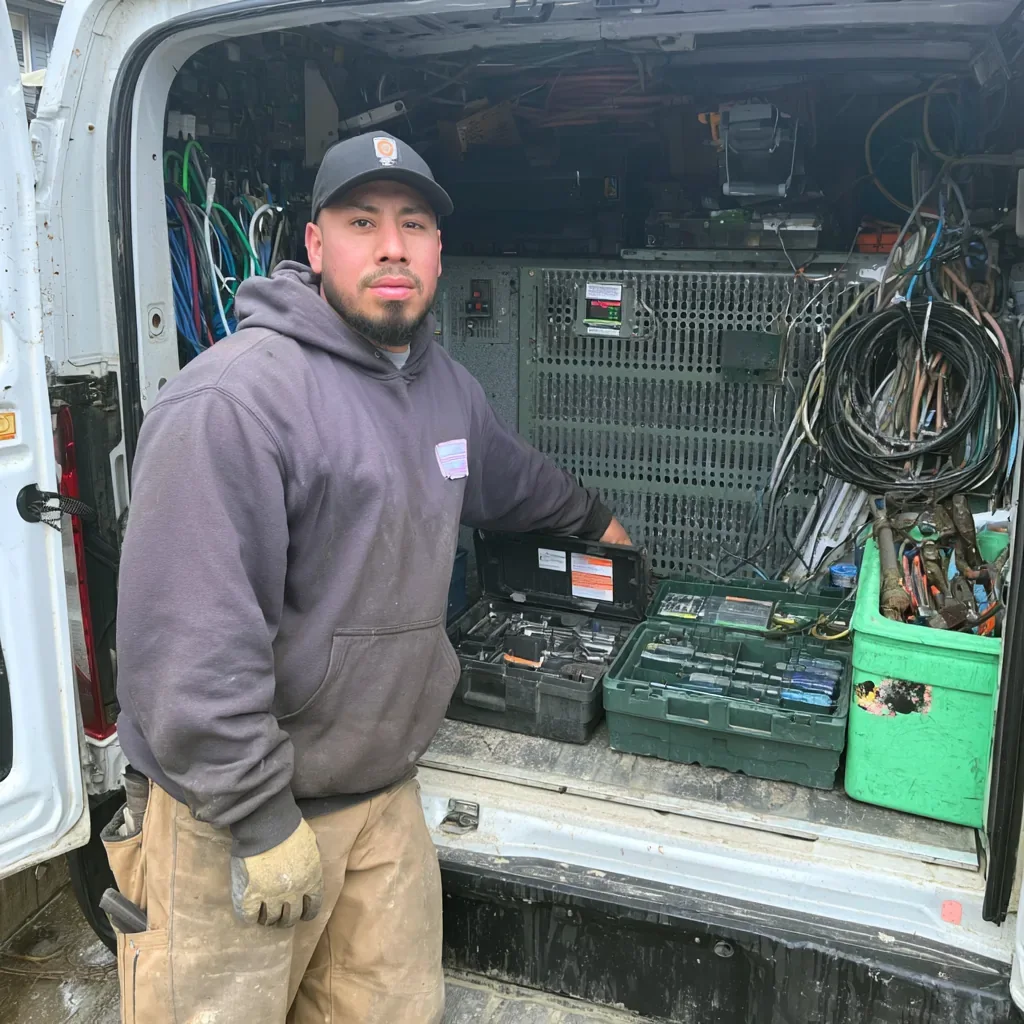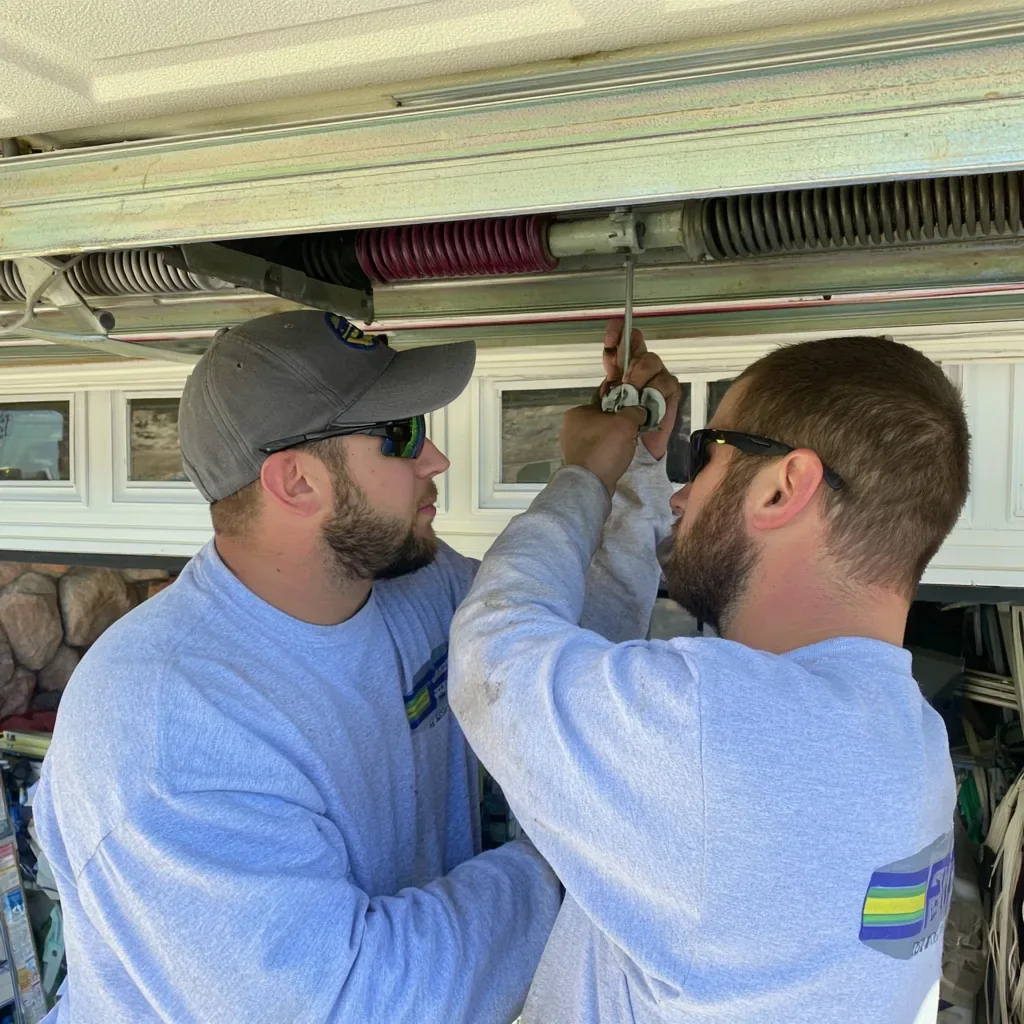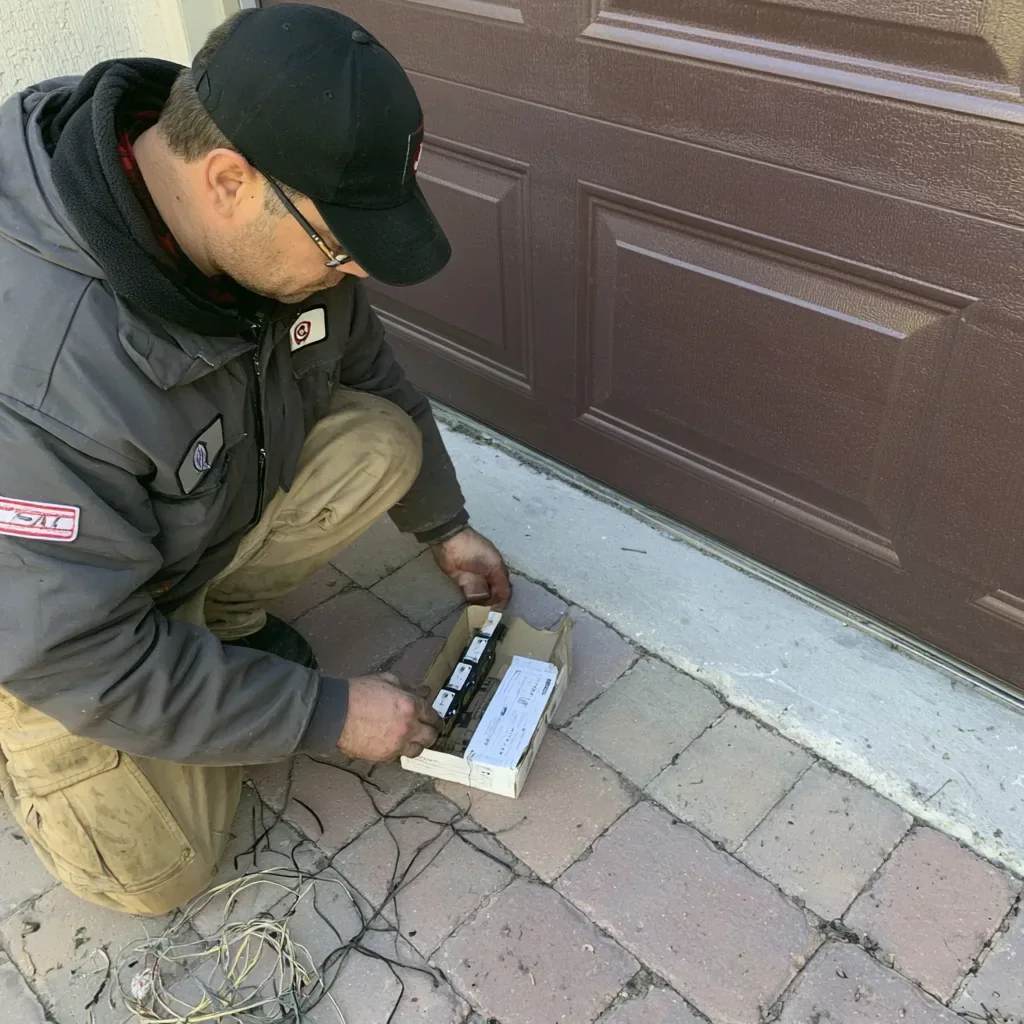
When a torsion spring breaks on a cold January morning in Leawood, the door sits dead and the opener cannot lift it alone. A written quote is how you see what will actually be installed before anyone touches the hardware. Good paperwork lists the spring size, the cycle rating, whether both sides are replaced, and what else is included besides labor. This guide walks through each line so you can compare two estimates on equal terms.
Most Leawood garages use attached two-car sectional steel doors, often sixteen by seven, with torsion springs above the opening. A clear estimate names that door size and the exact spring measurements taken to match it. Later sections explain size and rating, why pairs are matched, what cable and hardware lines mean, how labor should read, and how warranty language should look in writing. Read straight through and a thin one-line price starts to stand out.
Why Quotes List More Than Price
A usable spring line in Leawood names wire size, inside diameter, and length, not just door size or color code. Those three numbers decide lift and balance, and the pros we connect you with use them to match the weight of your insulated steel door. If a quote only says new spring or heavy-duty spring, you cannot tell what is planned. Ask for the full measurement in writing, along with door height and weight notes, so a second quote can be compared piece for piece.
A spring quote for a Leawood home lists the door size, the spring dimensions and cycle rating, whether both springs in a pair are being replaced, and what cables and labor are included, plus warranty terms in writing. Most Johnson County houses use two-car sectional steel doors with torsion hardware, and January cold snaps snap tired coils, so paperwork should match the door weight rather than reuse numbers. The sections below explain each entry around Hallbrook and along 119th Street, near Ironwoods Park, so you can compare documentation before any work starts.
Spring Size And Wire Details
On a two-spring torsion system, the pair works together to balance a heavy Leawood door across the full travel. When one coil snaps from fatigue after a hard freeze, the other has lived the same winters and the same daily lifts. Good quotes therefore list a matched pair, same size and rating on both sides, rather than a single spring. If only one is proposed, the paperwork should explain why in writing and note how balance and lift were checked.
That matched-pair line keeps Leawood comparisons honest along corridors like 135th Street where houses share similar three-car layouts. One estimate with two matched springs and another with one spring are not the same job, even if the bottom-line totals look close. Look for quantity, hand of wind if shown, and confirmation that both springs carry the same rating. Without those details, a lower total may only mean less hardware, not better value or longer life.
Cycle Rating And Door Weight Match
Cables lift with the springs on most Leawood sectional doors, and worn strands or frayed ends change how a replacement should be quoted. Good paperwork states whether cables are included, what type and length is planned, and whether drums, bearings, or fasteners were inspected. A line that says check cables is not the same as replace cables. When replacement is needed, the quote should list parts and labor separately so you can see the full scope before work starts.
That same rule applies to small hardware around Ironwoods Park homes where de-icing grit wears rollers and hinges through winter. A clear Leawood quote will note the condition of rollers, hinges, and brackets without folding a full door rebuild into a spring job. If nothing else needs changing, it should say so plainly. If something does, each part needs its own line with its own charge, so the spring work itself stays easy to compare across estimates.
Matched Pair Replacement Explained
Labor on a Leawood spring quote should describe the work, not just a flat fee. Look for spring removal and installation, balancing and testing through several open-close runs, opener limit checks, and cleanup. The paper should also show any visit or diagnostic charge and whether it applies to the repair if you approve. When labor, parts, and visit charges share one lump sum, you cannot tell what was done or what would be credited back.
Clear timing notes also belong on a Leawood estimate, especially after a January cold snap when many doors fail together. The quote should give an arrival window and state that timing must be confirmed directly when calling, since availability shifts by job and location. It should list the full written scope before work begins, with parts, labor, and warranty terms attached. Verbal promises about speed or extras carry little weight unless they appear on the page.
Cables And Hardware On Quote
Warranty language is where Leawood paperwork often thins out, so read that block word for word. A complete entry names the spring warranty length, whether it covers parts only or parts and labor, and what voids it, such as lack of maintenance or added door weight. It should also state who honors the claim and how to request it. If the page says lifetime or guaranteed without limits and steps, ask for those details to be added before you agree.
Separate warranties for different parts are normal on a Leawood door with new springs and cables together. Springs may carry one term, cables and rollers another, and labor a shorter service term for adjustment and rebalancing. Good paperwork lists each one on its own line with start date and claim steps. When only a single warranty line appears for a multi-part job, ask which parts it covers and which parts carry no written cover at all.
Labor And Visit Charges Listed
Thin paperwork is itself a signal for Leawood readers near Tomahawk Creek who compare two or three written bids. Missing measurements, no cycle rating, no pair quantity, bundled parts and labor, and vague warranty words all make equal comparison impossible. A complete sheet answers those points without extra pages or pressure. Keep the estimates side by side, mark what each line leaves out, and the gaps turn into exact questions to put back to the writer.
With a full quote in hand, a Leawood homeowner can finally ask pointed follow-ups instead of starting over. What are my exact spring measurements and cycle rating, are both sides matched, are cables and small hardware listed separately, what does labor and the visit charge include, and what are the written warranty terms for each part. When those answers come back on paper, the choice between bids rests on facts rather than guesses.
Warranty Terms Put In Writing
A good warranty section in Leawood lists parts and labor on separate lines, with months or years for each. The spring warranty should name the spring itself, not the visit, and the labor line should state how long adjustments are covered. Look for the conditions in plain language, such as door balance, proper opener setting, and normal residential use. The pros we connect you with should leave this in writing before work begins, so you can compare papers side by side.
Exclusions matter as much as length in Leawood homes in Johnson County with daily-use doors. Paperwork should say whether cables, bearings, and follow-up fine-tuning are included or listed apart, and what voids coverage, like an opener force set too high or a door forced while frozen. Keep the signed scope with arrival window, parts, labor, and warranty terms together. If a promise is spoken but missing from the page, ask for it to be added, since only written terms help under the Kansas Consumer Protection Act.
What If Only One Number Appears?
A single total tells you little in Leawood, where most garages hold 16 by 7 or 18 by 7 insulated steel doors that need a matched lift. Without spring length, inside diameter, wire description, and cycle rating, you cannot tell if two papers describe the same job. Ask for each part named, cable work stated as included or extra, and labor shown apart from materials. Itemized paperwork also makes it clear whether a like-for-like spring swap is all that is planned.
Watch for phrases like new springs or fix door in a Hallbrook area quote that never names size or pair. Clear paperwork in Leawood near 135th Street would instead list two matched torsion springs for the door weight, cable check or replacement, labor, and warranty terms. Keep both papers and compare line by line rather than total to total. If the writer will not add missing details, treat that silence as information and request a revised sheet before you agree to anything.
Should Old Springs Stay For Comparison?
Many homeowners ask to see the old coils after the job in the Hills of Leawood, and that request belongs on the quote. Good paperwork notes that old parts stay for your review and that markings will be shown, so you can see the pair match. Torsion systems use two springs made for the same door, and extension hardware on older north-side ranches should show safety cable notes. Seeing the set together helps the paper record match what is above the door.
A second line worth wanting covers the after-check in Leawood near Nall Avenue. The quote should state a balance and safety check after install, with cables seated, rollers moving freely, and opener limits reset by the pros we connect you with. Do not measure or touch springs under tension yourself. Keep the final invoice clipped to the quote, with any changed part numbers written in, so later warranty questions start from the same page you approved.
Does Cold Weather Change Paperwork?
Leawood winters shape what good paperwork mentions, since most metro breaks happen November through March when a warm spell snaps to a hard freeze. The quote should note cold-rated lubrication of springs, bearings, and hinges, and a check of the rubber bottom seal that can freeze to the slab overnight. Around Ironwoods Park, daytime meltwater often refreezes at the threshold, so a line about seal and photo-eye check shows the writer is thinking past the coils.
Expansive Sharpsburg clay under Johnson County driveways also moves slabs enough to change door alignment. Near College Boulevard in Leawood, a careful quote lists checking track plumb and cable tension evenness rather than springs alone. De-icing salt tracked in during winter and spring pollen on sensors add drag and false stops, so paperwork that names cleaning and sensor aiming reflects local use. Those small lines help explain why two homes with the same springs still need slightly different labor notes.
When To Ask For Revised Paperwork?
Ask for a new sheet in Leawood when basic facts are wrong, such as door size, torsion versus extension type, or single versus pair. Homes off Mission Road include both newer insulated doors and older ranches, so a mix-up matters for lift. A like-for-like spring swap needs no HOA approval, while a door swap often does, so the paper should state that only springs and related hardware change. Correct details now prevent warranty disputes later.
Also pause for revision if the job grows after the door is opened at a Leawood home near Prairie Village, such as frayed cables or worn bearings found once tension is off. The writer should list the added parts, added labor, and any warranty change, with business registration and liability insurance already noted. Confirm timing directly when calling, since availability varies by job. Do not authorize extra work by voice alone, and keep every version until the balance check is signed.
Dealing with this in your home?
In Leawood, most spring trouble starts with winter, not use, as repeated freeze-thaw cycles tighten fatigued steel until a cold night snaps a coil on an attached two-car sectional door. Johnson County homes from Hallbrook to the 135th Street corridor and near Ironwoods Park often show the same pattern: a door over 150 pounds dead, an opener straining, and roots drying clay on one side of the slab. This post explains why cold breaks happen, what a safe repair visit covers, and when to call the pros we connect you with.