A spring inspection visit gives homeowners a factual starting point when the door feels heavy, uneven, noisy, or unreliable. In Leawood, the guide band for this job is $189 to $459, depending on access, door configuration, testing needs, and the written scope. That visit is not the same as a repair, because the pros we connect you with must first see how the spring, cable, drum, bearing plate, and opener work together. A careful inspection can identify a safety issue before anyone discusses replacement parts or labor.
The useful question is not simply whether the spring looks broken. The useful question is whether the complete door system is operating safely, whether the spring has the correct tension, and whether related hardware is contributing to the complaint. A documented visit can separate an adjustment from a replacement, explain what the technician observed, and show which findings affect the repair recommendation. Knowing that process helps you compare service descriptions without assuming that every visit fee includes repair work.
What an Inspection Visit Actually Covers
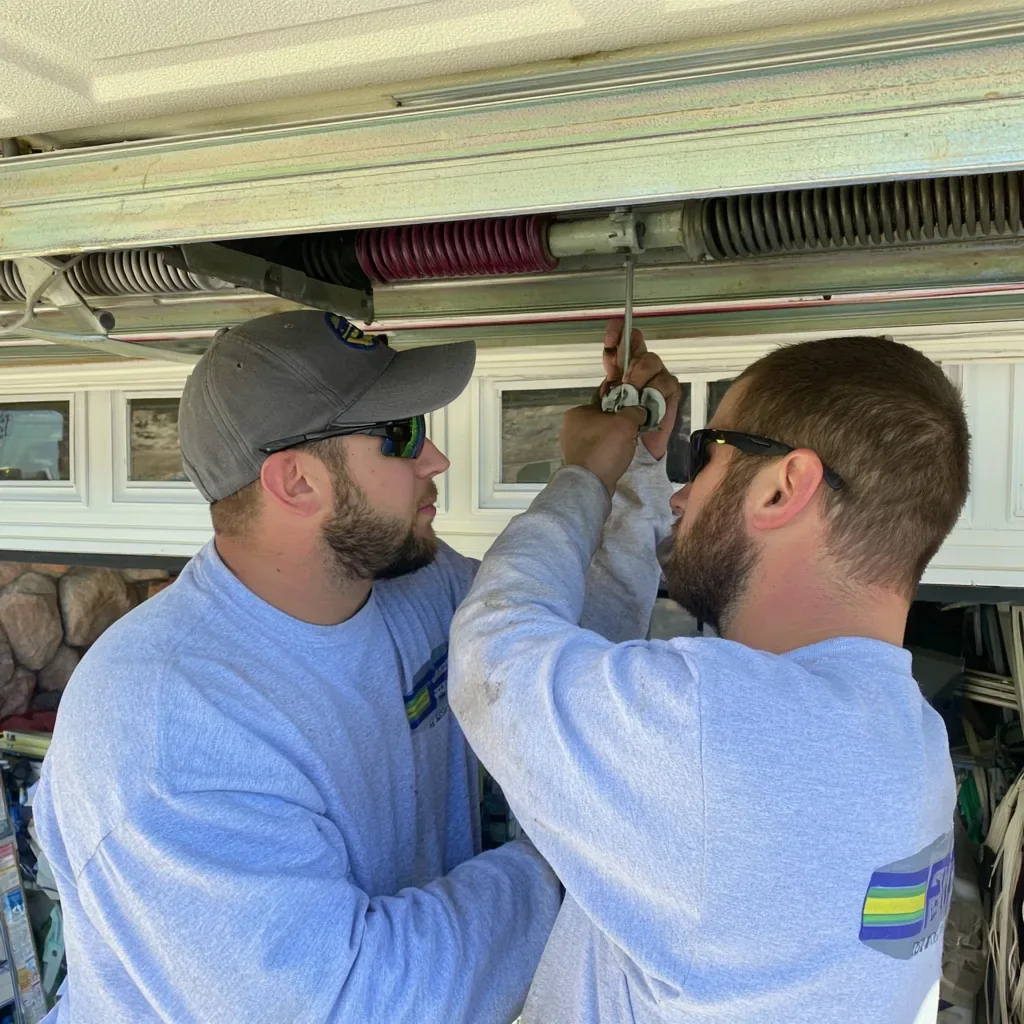
An inspection visit begins with a controlled review of the garage door and its operating condition. The pros we connect you with look at the torsion spring, shaft, cable, drum, bearing plate, hinges, rollers, tracks, brackets, and opener connection. They watch how the door moves, listen for rubbing or binding, and check whether the hardware shows wear that could affect safe operation. The review should also consider visible damage, unusual movement, and evidence that the spring has lost tension.
The visit covers observations that cannot be made accurately from a phone description alone. The technician may operate the door under controlled conditions, inspect attachment points, and identify whether the complaint comes from the spring system or another component. The scope should explain what was examined, what could not be tested, and whether the door should remain out of service. It should also distinguish an inspection finding from a repair recommendation, so you understand what the visit established before approving further work.
Why a Visit Charge and a Repair Price Are Separate Things
A visit charge pays for the time, travel planning, safety preparation, inspection equipment, and diagnostic judgment required to evaluate the door. That work has value even when the spring is not replaced during the appointment. The pros we connect you with must make the door safe to examine, isolate the source of the problem, and document conditions that are not visible in a photograph. Those steps consume labor before any replacement part is selected.
A repair price covers a later scope, which may include a torsion spring, cable, drum, bearing plate, adjustment, or related labor. The final scope depends on what the inspection finds, rather than on the fact that a visit occurred. Ask whether the written repair proposal applies the inspection charge as a credit, applies it only to approved work, or keeps it separate. That question prevents confusion when comparing providers, because similar visit charges can lead to different total repair terms.
What the Inspector Measures, and With What
The inspector measures door balance, spring dimensions, shaft details, available headroom, cable position, and the condition of the mounting hardware. Spring measurements can include wire size, inside diameter, length, winding direction, and the space available for a compatible replacement. The technician also checks whether the cable tracks correctly on the drum and whether the drum sits properly against the bearing plate. These details help identify mismatched or fatigued components.
The tools should match the task rather than rely on visual guesses. A tape measure can document clearances and spring length, while calipers can help assess wire size and shaft dimensions. A winding bar is used for controlled torsion work, not as a substitute for diagnosis, and a level can reveal alignment concerns around tracks or mounting points. The pros we connect you with should record relevant measurements in the report, because those details support a specific repair scope and reduce avoidable part-selection errors.
The Balance Test, and What It Tells You
A balance test shows how much force the torsion spring provides compared with the door's actual weight. With the opener disconnected and the door handled under controlled conditions, the technician checks whether the door can remain in a stable position without dropping or rising unexpectedly. Excessive effort, drifting movement, or a sudden fall can indicate incorrect spring tension, a damaged component, or a door that has become heavier through wear.
The result does not prove that the spring alone caused every operating problem. A cable can be misaligned, a roller can bind, or a track can create resistance that changes how the door feels during testing. The balance result gives the pros we connect you with a way to compare spring support with the door's movement and hardware condition. A useful explanation states what the test showed, what it did not establish, and whether the opener should remain disconnected until repair work is considered.
What a Written Report Should Contain
A written report should identify the door system inspected, the visible condition of its torsion spring, and the hardware examined during the visit. It should note cable placement, drum condition, bearing plate condition, shaft alignment, track movement, and any opener observations relevant to the complaint. The report should describe symptoms in plain language while preserving trade terms, so you can understand both the problem and the component involved. Photographs can support those observations when they clearly show the condition being discussed.
The report should separate facts, safety concerns, and recommendations instead of presenting one unexplained conclusion. It should state whether the spring is intact, fatigued, broken, mismatched, or impossible to assess fully without further access. It should also identify excluded areas, testing limitations, and whether the inspection charge receives a credit toward approved repair. A clear report lets you compare the proposed scope with the observed condition, rather than accepting a replacement recommendation without knowing what the inspection actually found.
When an Inspection Is Worth Booking
An inspection is worth booking when the door has become heavy, crooked, loud, or difficult to lift and the cause is uncertain. It is also useful after a cable comes off a drum, a spring breaks, the door binds during travel, or the opener struggles with a change in resistance. In those situations, continued operation can obscure the original problem or place additional strain on hardware. A direct inspection gives the pros we connect you with access to conditions that a description cannot establish reliably.
The visit is especially useful when the door has multiple symptoms or when previous adjustments did not resolve the complaint. It can clarify whether a torsion spring, cable, drum, bearing plate, track, or opener connection belongs in the repair scope. An inspection also makes sense when you want documentation before authorizing work or when a proposed replacement does not explain the observed behavior. The value comes from narrowing the diagnosis and defining the work, not from treating every concern as a spring replacement.
When an Inspection Is Not Worth Booking
An inspection may not be worth booking when the requested service is already clearly defined and the provider can quote that scope from complete, reliable information. For example, a known broken spring with accessible hardware may need a direct repair discussion rather than a broad diagnostic visit. Even then, the pros we connect you with must confirm safety, compatibility, and related damage before beginning work. A clear description of the known condition helps determine whether inspection time adds useful information.
It may also be unnecessary when the concern is limited to a simple question that does not involve operating or dismantling the door. A request for general maintenance information, a report copy, or clarification of an existing recommendation may belong in a conversation rather than a new visit. The important distinction is whether an on-site assessment can change the decision. If the condition is already documented and the repair scope is specific, ask what an additional inspection would establish before paying for another evaluation.
How an Inspection Changes What a Later Repair Costs
An inspection changes a later repair price by replacing assumptions with measurements and observed conditions. The pros we connect you with can determine whether the door needs a torsion spring, paired springs, a cable, a drum, a bearing plate, or an adjustment after seeing the system. They can also identify access problems, damaged mounting points, or alignment concerns that affect labor. That information turns a broad complaint into a defined scope with parts and work described separately.
The inspection can lower uncertainty without guaranteeing a lower price. A spring that appears to be the only issue may share the problem with a cable or drum, while a noisy door may need alignment rather than spring replacement. The report lets you see which findings change the proposed work and which are only observations. Ask whether the visit charge is credited toward approved repair, because that policy affects the eventual total even when the repair recommendation remains unchanged.
What Cannot Be Judged Without Seeing the Door
A phone call or photograph cannot reliably establish door weight, spring tension, shaft condition, cable tracking, or the amount of resistance in the tracks. It also cannot show whether the bearing plate is secure, whether the drum is aligned, or whether the opener is reacting to a mechanical problem. A visible break may be obvious, but the condition of nearby hardware still requires an on-site view. The pros we connect you with need access to the door and its operating area to judge those relationships.
Remote information can help organize the visit, but it cannot replace direct testing of movement and balance. The same symptom may come from a weak torsion spring, a damaged cable, a binding roller, a bent track, or an opener connection that is under unusual load. Without seeing the door, a provider cannot responsibly confirm the complete repair scope or identify every safety limitation. An inspection report should therefore distinguish what was observed in person from what was only reported by the homeowner.
Timing Through a Johnson County Winter
Winter conditions in Johnson County can make a marginal spring system more noticeable, especially when cold temperatures stiffen lubricants and change how hardware moves. A door that felt merely noisy may become heavy, slow, or uneven when the temperature drops. Repeated morning use can expose weak spring tension, cable movement, or resistance at the rollers and tracks. Those symptoms do not identify the failed component by themselves, but they can make an inspection more useful before continued operation worsens the condition.
Timing should be based on the door's behavior and safety, not on a promised seasonal schedule. If the door will not balance, the cable has left the drum, or the spring is visibly broken, avoid forcing movement while arranging an evaluation. The pros we connect you with can assess whether weather-related stiffness is contributing to the complaint or merely revealing existing wear. A written finding can separate temporary cold-related resistance from hardware damage that requires a repair decision.
What to Ask Before the Visit Is Booked
Before booking, ask what the visit charge covers, what areas will be inspected, and whether the technician will provide a written report. Ask whether the pros we connect you with will perform a balance test, document spring and cable measurements, and identify limitations if part of the door cannot be accessed safely. Also ask whether the charge receives a credit toward approved repair and which conditions would create a separate repair proposal. Clear answers define the appointment before it begins.
You should also ask what information to provide about the symptom, recent changes, and whether the door is currently safe to operate. Ask whether you should leave the opener disconnected, keep the door closed, or avoid handling a loose cable or broken spring before the visit. Confirm that the proposed inspection concerns the complete spring system rather than only the visible coil. These questions help you compare appointment terms and ensure the resulting report addresses the condition that prompted the call.
Dealing with this in your home?
In Leawood, most spring trouble starts with winter, not use, as repeated freeze-thaw cycles tighten fatigued steel until a cold night snaps a coil on an attached two-car sectional door. Johnson County homes from Hallbrook to the 135th Street corridor and near Ironwoods Park often show the same pattern: a door over 150 pounds dead, an opener straining, and roots drying clay on one side of the slab. This post explains why cold breaks happen, what a safe repair visit covers, and when to call the pros we connect you with.