Choosing a high-cycle torsion spring is mainly a decision about service life, not appearance. In Leawood, homeowners comparing a repair referral quote want to know whether the added upgrade cost buys meaningful time before another spring replacement. The answer depends on cycle rating, door weight, wire size, spring length, and how often the door operates. A clear scope should connect those details to the proposed torsion spring rather than describe it as merely heavy-duty.
This guide uses a guide band of $249 to $549 for the job, while explaining why a high-cycle choice may cost less per year when its longer service is actually used. The pros we connect you with can compare the current spring, explain the expected cycle rating, and show how the door’s balance affects the recommendation. The goal is not to sell the most expensive coil, but to make the life calculation understandable before a homeowner approves work or compares another written referral.
What a Cycle Rating Means in Plain Terms
A cycle rating is a plain-language estimate of how many complete door openings and closings a torsion spring is designed to handle before metal fatigue becomes likely. One cycle means the door travels up and returns down, whether the opener performs that movement or a person lifts it. The rating does not describe calendar years directly, because frequent use consumes the spring’s working life faster than occasional use. It describes repeated movement under the load created by the particular garage door.
Most builder-grade coils are commonly discussed around 10,000 cycles, while a high-cycle coil may be rated from 20,000 to 30,000 cycles when correctly matched and installed. That comparison helps translate a technical label into expected service, but it remains an estimate rather than a promise of a particular date. A cycle rating matters only when the spring is sized for the door, balanced properly, and protected from avoidable operating problems. It is useful for comparing options, not for predicting an exact failure morning.
What Separates a Builder-Grade Coil From a High-Cycle One
A builder-grade coil is selected to meet a basic equipment specification, usually with a practical balance between material use, expected duty, and installation cost. A high-cycle coil is made and configured for more repeated flexing, so its design aims to reduce fatigue during the same lifting work. The difference is not a marketing label alone; it should appear in the stated cycle rating, wire characteristics, spring length, and sizing calculation.
High-cycle construction may use longer active coils, carefully chosen wire, or both, depending on the door’s torque requirement. It must also fit the shaft, bearing plate, cable drums, and available space without changing the door’s intended balance. A longer-life spring installed with the wrong dimensions is not a meaningful upgrade, while a correctly specified spring can deliver its intended advantage. The pros we connect you with should explain which design feature supports the quoted rating. That explanation lets a homeowner compare equipment instead of relying on appearance.
Wire Size, Length, and Why Longer Springs Last Longer
Wire size affects how much stress each turn experiences as the spring winds and unwinds during door movement. The spring must be strong enough to produce the required torque, yet its dimensions must allow the working metal to flex without excessive strain. Length matters because a longer active spring spreads the same twisting work across more material, reducing the demand placed on each turn during operation.
That is why longer springs often support a higher cycle rating when their wire size and other dimensions are correctly selected. Longer does not automatically mean better, since available shaft space, cable drums, bearing plate, and door torque limit the usable design. The quote should identify wire size and spring length rather than calling the part upgraded without specifications. The pros we connect you with can verify that the proposed dimensions suit the existing assembly. A visible difference in length is useful only when the rating supports it.
Who Should Consider the Upgrade
The upgrade is usually worth considering for a household that opens the garage door repeatedly, depends on it every day, or expects to keep the same door for many seasons. It can also suit a homeowner who wants to reduce the chance of paying for another spring decision after the current repair. The value comes from using the extra service capacity, not from choosing a premium part simply because it sounds stronger.
It may not be worthwhile for a property that is being sold soon, a door used only occasionally, or an assembly nearing a broader replacement decision. It is also a poor fit when the quoted high-cycle spring cannot be matched to the door’s weight, shaft space, or balance. Ask the pros we connect you with to compare expected use against the upgrade, rather than treating every garage door as the same case. That keeps the recommendation practical and tied to the way the household actually operates the door.
How the Extra Cost Compares With a Second Replacement
Comparing the upgrade with a second replacement requires looking beyond the spring itself. A later repair can involve another service visit, safe door support, removal of the failed coil, winding, balance testing, and opener testing, so repeating the work may cost more than the original part choice suggests. The relevant question is whether the added amount in today’s scope buys enough additional service to avoid repeating that process sooner.
For this job, the guide band is $249 to $549, but the band does not identify how much of the work is the high-cycle option. A useful comparison separates parts, labor, and any included adjustment, then considers how long the standard choice may serve under the household’s use. If the upgrade lasts through the period when a standard spring would need replacement, its cost per year can be lower even when its first invoice is higher. The pros we connect you with should explain that comparison without promising a precise lifespan.
What the Upgrade Does Not Fix
A high-cycle spring changes the spring’s fatigue capacity; it does not repair every part that helps the garage door move. It will not straighten a bent track, correct a damaged panel, replace worn cable, restore a failing drum, or cure a problem with the opener. Those conditions can continue to create noise, resistance, poor travel, or unsafe movement after the new coil is installed.
It also does not compensate for an incorrectly balanced door or a loose bearing plate. If the door is heavy because of a panel problem, the spring must not be used to mask that condition through improper sizing. A proper upgrade can reveal existing wear during testing, but the upgrade itself addresses only the torsion spring specification. Ask which separate defects were found, which remain, and which work the written scope actually includes. That distinction prevents a higher cycle rating from being treated as a complete door repair. It keeps the decision technically honest for the homeowner.
Door Weight Matters More Than Appearance
Door weight determines the torque that the torsion spring must provide, so it is central to choosing the upgrade specification. A spring that is too light may leave the door difficult to lift, while one that is too strong can interfere with balance and safe operation. The correct selection follows the door’s actual load rather than relying on a standard part that happens to fit the shaft.
Weight can change with insulated panels, windows, hardware, repairs, or accumulated wear, which is why appearance alone does not establish the right spring. The pros we connect you with should check balance, measure the existing assembly, and account for the cable drums and bearing plate before recommending wire size and length. A high-cycle rating is useful only after those load questions are answered. In Leawood, the same upgrade label can therefore describe different spring specifications on different doors.
What the Written Quote Should Show
A written quote should identify the spring as high-cycle and state the cycle rating instead of using only broad terms such as premium or heavy-duty. It should also show wire size, spring length, inside diameter, and whether the recommendation applies to a single spring or a paired set. Those details make the proposed part identifiable before anyone begins work.
The scope should connect the part to the door’s measured weight and explain any balance adjustment, cable or drum condition, bearing plate concern, and opener testing included in the visit. It should separate the guide band of $249 to $549 from the description of what that amount covers, without hiding the upgrade in a vague parts line. Ask for the manufacturer’s stated rating or other documentation supporting the specification. Clear paperwork gives you something concrete to compare with another referral before approving the repair in writing and checking the delivered spring.
Fitting an Upgrade During the Failure Visit
When a standard spring fails, an upgrade can often be considered during the same repair visit, but the replacement should begin with inspection rather than substitution. The pros we connect you with need to secure the door, identify the failed spring, check cable and drum condition, and confirm that the shaft and bearing plate are suitable. Those checks establish whether the existing assembly can accept the proposed high-cycle design.
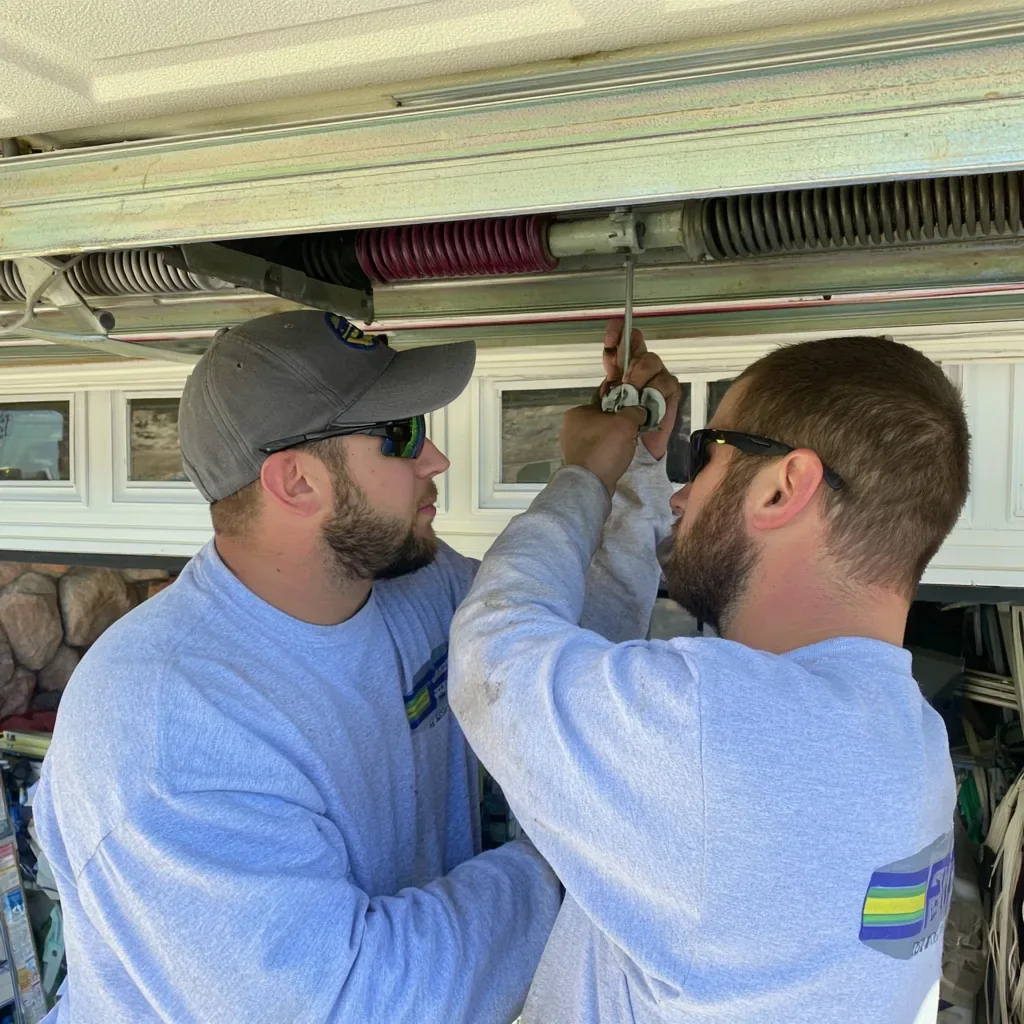
After the correct spring is selected, the pros we connect you with can install it, wind the torsion spring, set the door’s balance, and test travel with the opener. The failure does not automatically prove that every surrounding part needs replacement, nor does it prove that a high-cycle option fits without measurement. Ask what was found, what was changed, and how the completed door was tested. That keeps an urgent repair from turning into an unexplained upgrade with no clear technical basis.
How Leawood Winters Shorten Any Coil’s Life
Leawood winters can shorten any coil’s useful life by adding cold operation to the repeated flexing that already causes fatigue. Lower temperatures can make lubricants thicker, increase resistance at moving parts, and expose an existing balance problem when the opener has to work harder. The spring still follows its material and sizing limits, even when a seasonal failure makes the weather seem like the only cause.
Temperature changes can also affect metal movement and the way the door, cable, drum, and bearing plate behave together. Cold weather does not turn a standard spring into a high-cycle spring, and a higher rating cannot excuse binding tracks, damaged cables, or poor balance. Keeping the assembly properly adjusted helps either coil reach its intended service, while the rating determines how much repeated flexing the spring was designed to tolerate. A written recommendation should account for local winter use without promising a guaranteed lifespan.
Questions That Make the Rating Verifiable
Ask which exact cycle rating is being proposed, whether it is stated for each spring, and what source supports that rating. Then ask for the wire size, active length, inside diameter, and torque calculation tied to the door’s measured weight. A verifiable answer should identify the spring specification clearly, rather than relying on a label that could describe several different products.
Ask how the pros we connect you with confirmed the cable drums, bearing plate, shaft space, and door balance before selecting the coil. Ask what part of the written scope covers installation, adjustment, and testing, and whether any separate defect was excluded. Finally, request the rating and dimensions in the quote so the delivered part can be compared with the approved description. If those answers are specific and consistent, the upgrade is easier to evaluate as a service-life choice instead of an unsupported promise about durability over time.
Dealing with this in your home?
In Leawood, most spring trouble starts with winter, not use, as repeated freeze-thaw cycles tighten fatigued steel until a cold night snaps a coil on an attached two-car sectional door. Johnson County homes from Hallbrook to the 135th Street corridor and near Ironwoods Park often show the same pattern: a door over 150 pounds dead, an opener straining, and roots drying clay on one side of the slab. This post explains why cold breaks happen, what a safe repair visit covers, and when to call the pros we connect you with.